top – Claude (1600-1682), Landscape with Jacob and Laban and his Daughters, 1654,
Petworth House, Sussex [ 1435 x 2515 mm ]
bottom – Joseph Mallord William Turner (1775‑1851), Appulia in Search of Appulus, vide Ovid, 1814,
Tate [ 1485 x 2410 mm ]
top – Claude (1600-1682), Landscape with Jacob and Laban and his Daughters, 1654,
Petworth House, Sussex [ 1435 x 2515 mm ]
bottom – Joseph Mallord William Turner (1775‑1851), Appulia in Search of Appulus, vide Ovid, 1814,
Tate [ 1485 x 2410 mm ]


top : Orion II 1968 Marx Collection, Berlin
bottom : Free Wheeler 1955 Marx Collection, Berlin
from the exhibition description :
To consider the works of painter Cy Twombly only within the context of the art movements
of the 20th century would not do full justice to his work. His gestural, lavish compositions
are too complex, interspersed with small figurative sketches, numbers, words, and quotations.
In many cases his canvases are covered with a thick impasto; in others his compositions
suggest a generous sense of emptiness. Twombly draws unusual associations between
geometric order and chaotic knots of color, figuration and abstraction, image and concept,
painting and literature.
Cy Twombly, who was born in 1928 in Lexington (Virginia) and died in 2011 Rome, lived
in Italy as of 1960. This move inspired Twombly s intensive study of European art history.
In his work he established relationships to the Italian artists who had left Italy for France in
the 16th century, founding the ‘Ecole de Fontainebleau’, as well as to 17th-century French
artists who were influenced by this school, such as Nicolas Poussin (1594-1665).
The Fontainebleau school is a Mannerist decorative style, which was developed in the mid
16th century in the Fontainebleau Chateau. The French king François I commissioned
two Italian artists Rosso Fiorentino (1494-1540) and Francesco Primaticcio (1504-1570)
to decorate his chateau. Under their direction, Fontainebleau was transformed into a
Gesamtkunstwerk, which unfolded ist luxurious splendor through its architecture, gardens,
and extremely complex decorations.
Fiorentino and Primaticcio not only designed the paintings, frescos, tapestries and sculptures
required for the official representation of the court, they also used graphic media to disseminate
their programmatic repertoire. Hamburger Bahnhof presents a selection of these art works
from the collections of the Kupferstichkabinett and the Kunstbibliothek (Staatliche Museen
zu Berlin), offering an unusual dialogue with works by Cy Twombly from the Marx Collection.
Location: Hamburger Bahnhof – Museum für Gegenwart – Berlin, Invalidenstraße 50, 10557 Berlin, Germany
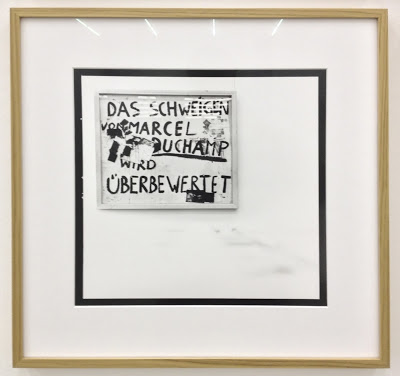
Der Schweigen von Marcel Duchamp wird Überbewertet.
The silence of Marcel Duchamp is overrated.
Location: Hamburger Bahnhof – Museum für Gegenwart – Berlin, Invalidenstraße 50, 10557 Berlin, Germany
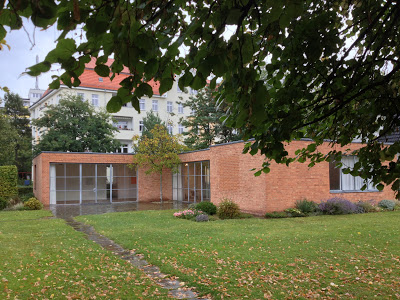
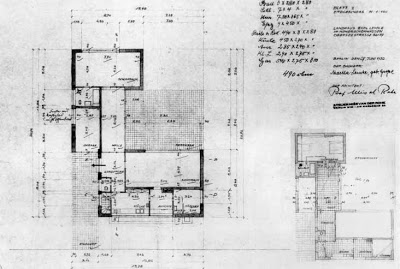
history 1932-1990
in 1930 karl and martha lemke buy a double piece of land by the lake obersee. in february 1932 mies van der rohe is given the contract to design a house for the couple. numerous designs are produced. in july 1932 permission is granted for the execution of the architectural plans; some changes to the project ensue. in august 1932 building work begins, by September 15th the structural inspection is complete and in march 1933 the final inspection is carried out. in may 1933 further additions to the project are granted building permission. from 1933-1945 the house is occupied by the lemkes. some pieces of furniture are probably designed for the house by lilly reich – the garden is landscaped by the studio of karl foerster. in may 1945, soviet troops requisitioned some of the houses by the obersee, including the lemke country house. the house is used by the soviet army as a garage and storage space and serious structural damage occurs. e.g. demolition of the entrance area and bricking in of the terrace windows. in 1962 the east german ministry of state security takes control of the house. further alterations are made to the structure of the building and to the garden.
As of today it has been fully renovated.
Location: Oberseestraße 60, 13053 Berlin, Germany
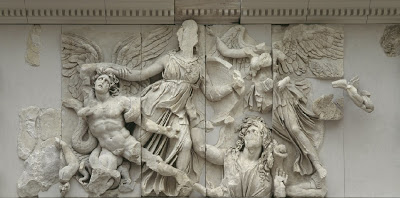
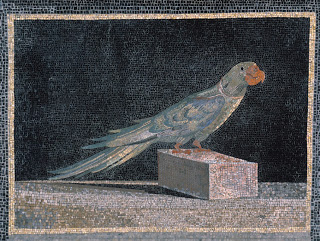
the reliefs are extraordinary – the mosaic extremely beautiful
top : Pergamon Altar-Athena Frieze c. 170 BCE
bottom : Parrot mosaic Early to mid-2nd century BCE [ 3030 x 1700 cm ]
Location: Pergamon Museum, 10178 Berlin, Germany
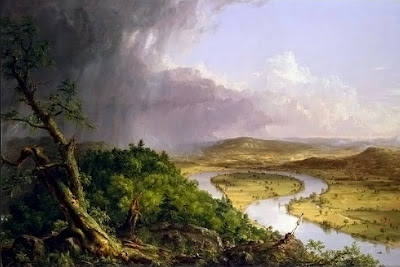
Thomas Cole – The Oxbow – 1836
Hudson River School
Location: METROPOLITAN MUSEUM OF ART, 1000 5th Ave, New York, NY 10028, USA
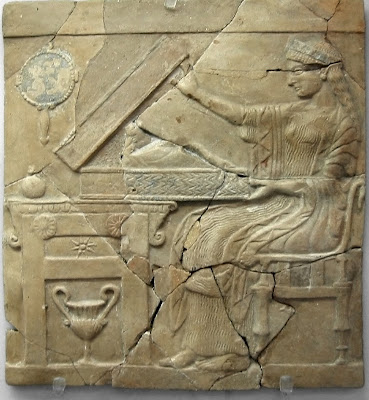
Pinax [ votive tablet ] of Persephone opening the “Liknon Mystikon”. Found in the holy shrine of
Persephone at Locri in the district Mannella. Locri was part of Magna Graecia and is situated on the
coast of the Ionian Sea in Calabria in Italy.
derivation of name | wikipedia :
In a Linear B (Mycenean Greek) inscription on a tablet found at Pylos dated 1400?1200 BC, John
Chadwick reconstructs the name of a goddess *Preswawho could be identified with Persa, daughter of
Oceanus and finds speculative the further identification with the first element of Persephone.
Persephonē (Greek: Περσεφόνη) is her name in the Ionic Greek of epic literature. The Homeric form of
her name is Persephoneia (Περσεφονεία,Persephonēia). In other dialects she was known under variant
names: Persephassa (Περσεφάσσα), Persephatta (Περσεφάττα), or simply Korē (Κόρη, “girl, maiden”).
Plato calls her Pherepapha (Φερέπαφα) in his Cratylus, “because she is wise and touches that which
is in motion”. There also the formsPerifona (Πηριφόνα) and Phersephassa (Φερσέφασσα). The existence
of so many different forms shows how difficult it was for the Greeks to pronounce the word in their
own language and suggests that the name has probably a pre-Greek origin.
Location: Soprintendenza Per I Beni Archeologici Museo Nazionale Di Locri, 89044 Locri, Province of
Reggio Calabria, Italy
“But origin always comes to meet us from the future…. If the two call to each other, and reflection makes its home within that calling….”
Heidegger : “Unterwegs zur Sprache” Pfullingen: Neske, 1959 – 96
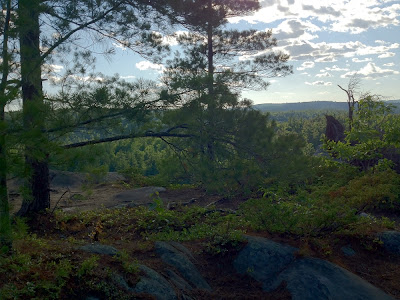
Location: Eagle’s Nest Trail, Calabogie, ON K0J 1H0, Canada

View from Kastelli hilltop [ Odysseus’ Palace ] towards the peninsula that Homer calls Asteris.
On the present day island of Cephalonia.
from : Odysseus Unbound – The Search for Homer’s Ithaca

View of Atheras Bay. Putative location of the Cave of the Nymphs.
On the Cave of the Nymphs (Antr.), late third or early fourth century CE. It is one of the few
extant works of the Neoplatonic philosopher Porphyry and is a literary interpretation of eleven
lines from the Odyssey (13.102-12).
There is a leafy olive at its head,
And nearby a delightful misty cave,
Sacred to the nymphs who have the name of Naiads.
Inside are mixing-bowls and double-handled
Jars made of stone, and here the bees store honey.
Inside are long stone looms, at which the nymphs
Weave sea-blue webs, a wondrous sight, and streams
Of ever-flowing water. It has two doors,
One to the north, by which men may descend,
The other to the south, for gods. This way
Men enter not: it is the immortals path. 13.102-12
(…ἄντρον,) ὃ διὰ τῶν ἐπῶν τούτων διαγράφει λέγων·
αὐτὰρ ἐπὶ κρατὸς λιµένος τανύφυλλος ἐλαίη,
ἀγχόθι δ? αὐτῆς ἄντρον ἐπήρατον ἠεροειδές,
ἱρὸν νυµφάων αἳ νηιάδες καλέονται.
ἐν τῷ κρητῆρές τε καὶ ἀµφιφορῆες ἔασι
λάινοι· ἔνθα δ? ἔπειτα τιθαιβώσσουσι µέλισσαι.
ἐν δ? ἱστοὶ λίθεοι περιµήκεες, ἔνθα τε νύµφαι
φάρε? ὑφαίνουσιν ἁλιπόρφυρα, θαῦµα ἰδέσθαι·
ἐν δ? ὕδατ? ἀενάοντα. δύω δέ τέ οἱ θύραι εἰσίν,
αἱ µὲν πρὸς βορέαο καταβαταὶ ἀνθρώποισιν,
αἱ δ? αὖ πρὸς νότου εἰσὶ θεώτεραι· οὐδέ τι κείνῃ
ἄνδρες ἐσέρχονται, ἀλλ? ἀθανάτων ὁδός ἐστιν. Antr. 55.1.2-13.
(…the cave) ?At the head of the harbor is an olive tree with long-pointed leaves,
and near it a lovely and dark cave,
which is sacred to the nymphs called naiads.
Within are kraters and amphoras
of stone, where bees store up honey.
Tall stone looms stand inside as well, and there nymphs
weave sea-purple cloth?a wonder to see.
Within this cave water is ever-flowing. There are two gates,
one toward the north which leads downward for men,
and another toward the south which is divine.
Men do not enter by the latter way, rather it is a path for immortals.? Odyessy(13.102-12)
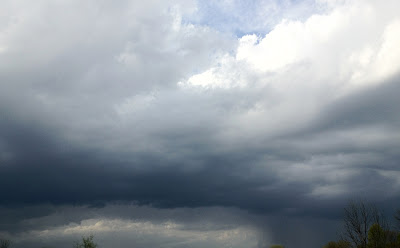

for my mom | bardo prayers
day nineteen – today [ excerpt from bardo prayers]
….look closely at the nature of what makes you afraid, and you will see emptiness
which has no nature whatever; this is called the dharmakaya ? the absolute Buddha
nature of all things. But this emptiness is not blank nothingness. The emptiness of your
fear manifests as wakeful clear awareness. That is called the sambhogakaya, the ideal
appearance aspect of Buddha nature.
The emptiness aspect and the clear wakeful awareness aspect are not two separate
things; the nature of emptiness is luminously clear awareness, and the nature of
luminously clear awareness is emptiness. Now the indivisible emptiness-clarity
awareness is stripped bare and the naked mind abides in the natural unfabricated state;
this is called the svabhavikakaya, the state of resting in own-being. Then the mind?s
own natural creative energy manifests everywhere spontaneously and without obstruction;
that is called the nirmanakaya ? the compassionate emanation body.
Look carefully in this way without distraction. As soon as you recognize your own
mind, you will attain complete enlightenment manifesting in these four ways. Do
not be distracted. This is the dividing line where buddhas and sentient beings are
separated. It is said of this moment:
In one moment they are different,
In one moment there is perfect awakening.
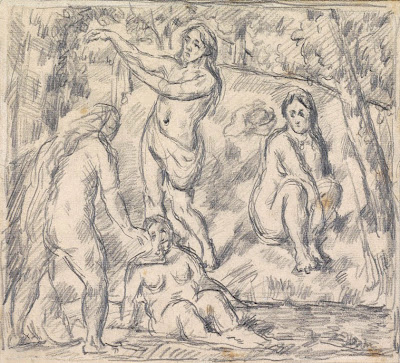
Study Of Four Women Bathing c 1879 – 1882
Museum Boijmans Van Beuningen
Location: Beuningen, The Netherlands
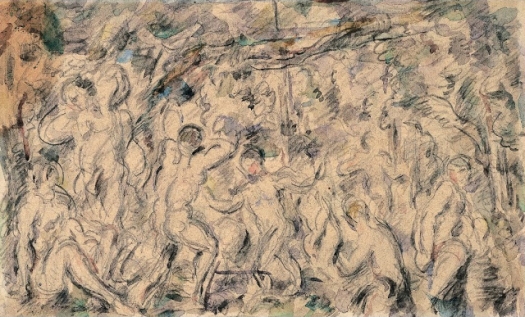
Bathers c. 1897 – 1900
Location : Japan, 〒104-0031 Tokyo, Chuo, Kyobashi, 1丁目10−1 Bridgestone Museum of Art
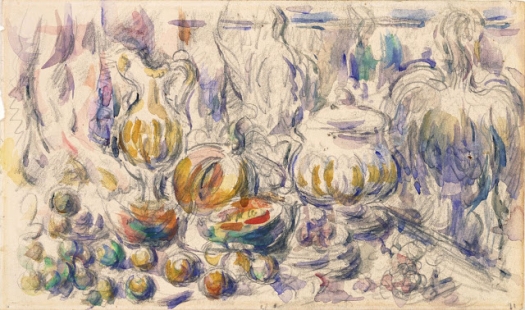
Pot And Soup Tureen 1888-90
National Museum of Western Art (Kokuritsu Seiyo Bijutsukan), 7 Uenokoen, Taito, Tokyo, Japan

Coast View with the Abduction of Europa c 1645 | detail below
J. Paul Getty Museum Los Angeles