Category: Buddhism

Establishing Appearances as Divine

All apparent phenomena are nothing but delusion, and there is, moreover, no freedom from delusion to be achieved by dispelling delusion. Delusion is, by its own essence, completely pure and, hence, enlightened. All phenomena are, in this way, primordially, fully, and completely enlightened. Phenomena appearing as various attributes are, therefore, indeed the mandala of vajra body, speech, and mind. They are like the Buddhas of the three times, never transcending the essence of complete purity. Sentient beings and Buddhas are not differentiated in terms of their essence. Just like distinct causes and results appearing in a dream, they are nothing but perceptions of individual minds brought forth by the power of imputation.

Establishing Appearances as Divine: Rongzom Chökyi Zangpo on Reasoning, Madhyamaka, and Purity

Jigme Lingpa

With regard to one?s behavior, one must relinquish all the limitations implied in subject-object duality (gzung ?dzin gyi la dor ba). One should abandon all ordinary ways of assessing outer and inner phenomena, and the engagement or withdrawal of the mind with regard to ?good? and ?bad.? One must not, through mindless clinging to sense objects, stray into the five ordinary mental poisons. For when approached with skillful means, all are but the display of the great and perfect equality.

Treasury of Precious Qualities: Book Two: Vajrayana and the Great Perfection by Jigme Lingpa, page 110 | by Longchen Yeshe Dorje, Kyabje Kangyur Rinpoche, Jigme Lingpa translated by Padmakara Translation Group

The Exalted Discourse on the Meditative State That Gathers All Merits

The Exalted Discourse on the Meditative State That Gathers All Merits states : O Stainless Brilliance ! For great bodhisattvas who yearn for the teachings, the teachings’ treasures have been placed in mountains, in ravines, and in forests. Long mantras and infinite gateways to the teachings made into volumes will come into their hands.

Jamgon Kongtrul Lodro Taye : The Treasury of Knowledge: Books Two, Three, and Four page 331

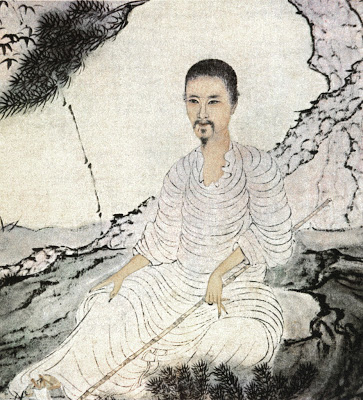
Shi Tao

929px-shitao-autoportrait


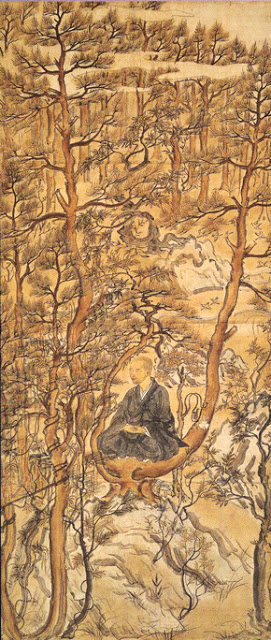
Shi Tao, Master Shi Planting Pines, c. 1674, ink and color on paper

Comments on painting Shi Tao :

One stroke method

(In the beginning there were no rules. When primeval naivete dispersed, rules took place. What were rules based upon? ONE,* the origin of beings, the base of changes, the power god applied, the ability man was endowed with but unaware of.**)

In the beginning there are no rules. When one’s naivete disperses, rules take place. What are rules based upon? ONE STROKE, the root of forms, the power the extraordinary applied, the ability the ordinary are endowed with but unaware of. How do rules take place? Awakening from within the self, one stroke grows into being and expands into rules.

Mountains, rivers and figures in riotous profusion; birds, beasts and plants of different character; water-side pavilions and towers of varying sizes – these are what painters take to heart. If a painter is unable to grasp the essence of form for a delicate expression, he must have been ignorant of this one stroke. As a journey begins with a single step, a painting, whatever it is about, begins with a single stroke; millions upon millions of brush strokes may follow, but it must end with one stroke, regardless of the when and why. If a painter takes such a stroke as the point of departure, he is unquestionably bound for success.

Without the wrist suspended the movement may not be free; without free movement the strokes may not be to one’s liking. Raise the wrist to be ready; turning the wrist to start; swing the wrist to finish a stroke. Push a stroke in checking motion; pull a stroke in lifting motion. Square-ended or round-ended, straight or curved, distorted or symmetric, tortuous or plain, wet or dry, brush strokes must be natural revelation. These rules, efficacious and time-tested, are the perfect avenues to the nature of forms and to the success of all expressions. Having chosen particular forms, pondered over and over for significance, decided the tone of a spectacle, gone over what in front and behind, with a single deft stroke, a painter produces vividly mountains, rivers, figures, birds, beasts, plants, water-side pavilions, or towers. Without any trace of affectation, such a stroke answers right his purpose.

When ONE STROKE takes place, all things can be defined. Therefore, I say, ?My doctrine is about one.?***

* Laozi, Way of Life, 42. Life, when it came to be, bore one. One bore two; two bore three; three bore all things.

** The Platform Sutra of Sixth Patriarch of Zen, Chapter One. He who sees from himself is the man, inspiration, Buddha.

*** The Analects of Confucius, Part Four. Master said, ?Sen, my doctrine is about one.? Disciple Zeng Sen replied, ?Yes.? When master was out, other disciples came up, asking, ?What do his words mean?? Zeng then said, ?His doctrine is about loyalty and forgiveness, that’s all.?

Location: National Palace Museum, Taipei, Taipei City, Taiwan 11143
apramana

upekkhā | equanimity – the wish that beings dwell in the great impartiality that?s free of attachment and aversion

mudita | great joy – the wish that beings not be separate from the great bliss that?s free of all suffering

karuṇā | compassion – the wish that all beings be free of suffering and its causes

maitri | loving-kindness – the wish that all beings have happiness and its causes

The brahmavihāras (sublime attitudes, lit. “abodes of brahma”) are a series of four Buddhist virtues and the meditation practices made to cultivate them. They are also known as the four immeasurables (Sanskrit: apramāṇa, Pāli: appamaññā)

Kudung Zhugbul

8809022119_eab26c2cbf_c


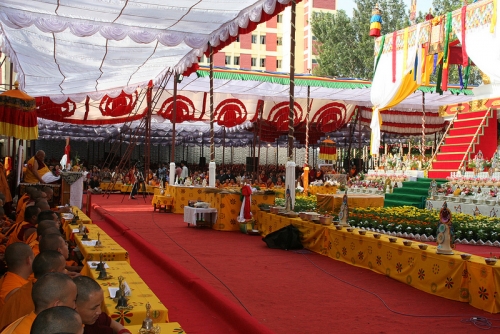
On 23 May 2013, an assembly of more than 10,000 attendees gathered
before the Cremation Stupa for the Holy Body of HH Drubwang Pema Norbu
Rinpoche.

The prayers began at 5 AM with senior lamas leading as follows:

His Holiness Taklung Tsetrul Rinpoche lead prayers in Zangdokpalri.

His Holiness Khyentse Yangsi Rinpoche and HH Karma Kuchen Rinpoche in
the Phurba Temple

His Eminence Tulku Thubsang Rinpoche in the Tara Temple

His Eminence Yangthang Rinpoche in the Shedra Temple

Guests and devotees began arriving as early 6 AM to find a seat under
huge tents raised for the occasion. At 8 AM, the processional
commenced, and the Kudung was taken from the location on the second
floor of Zangdokpalri Temple to the Cremation Stupa. The processional
arrived at about 9 AM and was taken from the box in which it had
remained the past four years.

Our senior lamas took their seats in the four directions around the
Cremation Stupa as follows:

To the South was His Holiness Taklung Tsetrul Rinpoche, the Supreme
Head of the Nyingma School and with a group of monks recited the
Thubje Chenpo practice.

To the West was His Holiness Khyentse Yangsi Rinpoche, throne holder
of Shechen Monastery, and incarnation of His Holiness Dilgo Khyentse
Rinpoche, a close friend to His Holiness Pema Norbu Rinpoche. His
Holiness Karma Kuchen Rinpoche sat by HH Khyentse Rinpoche and with
the assembled monks were praying the Dor Sem (Vajrasattva).

To the North was His Eminence Tulku Thubsang Rinpoche carrying through
the prayers of Palchen Dupa with assembled monks.

To the East was His Eminence Yangthang Rinpoche, reciting Shitro Nyen
Song Nejung with assembled monks.

The smoke arose to the sky as the fires were lit within the stupa,
bringing blessings to the entire world. May all beings benefit from
the vast and generous offerings made this holy day.

Location: Bylakuppe, Karnataka, India

Khenchen Palden Sherab Rinpoche

164967_10151404156072686_53755276_n


“The most eminent signs of accomplishment are devotion to the master, pure perception of
Dharma brothers and sisters, compassion for sentient beings, conscientiousness in regard to
cause and effect, disenchantment with samsara, detachment from material things, a peaceful
and gentle personality, and one-pointed focus on practice. When all these grow and increase
more and more in one’s being, this alone will suffice as signs of accomplishment.”

Tsele Natsok Rangdrol

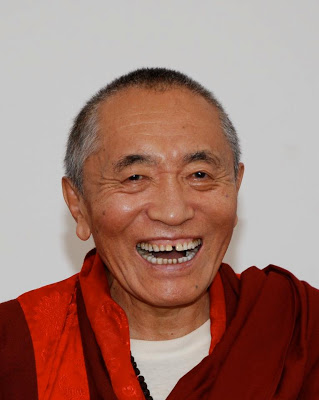
Photo of Khenchen Palden Sherab Rinpoche
Palm Beach Dharma Center, 2008

Priests of Virtue in the Kamakura Period

semuiji_myoue


The Monk Myoe from Kozan-ji, Kyoto, dated to 13th Century Kamakura period

Hanging scroll 145.0 cm x 59.0 cm color on silk
Priests of Virtue in the Kamakura Period | special exhibition 1993 Nara National Museum

Location: Nara National Museum, Noboriojicho, Nara, Nara Prefecture 630-8213, Japan

Self-arising Primordial Awareness

Within the essence of ultimate truth, [yang dag don gyi ngo bo la]
    there is no buddha or ordinary being. [sangs rgyas dang ni sems can med]
Since awareness cannot be reified, it is empty. [rig pa ‘dzin pa med pas stong]
Given that it does not dwell in emptiness, [stong pa nyid la me gnas na]
    it abides in its own state of supreme bliss. [rang gi bde chen sa la gnas]
The majestic ruler of all buddhas [sangs rgyas kun gyi rje btsan pa]
    is understood to be one’s own awareness. [rang gi rig pa shes par bya]
This monarch, naturally manifest awareness, [rang snang rig pa’i rgyal po nyid]
    is present in everyone, but no one realizes it. [kun la yod de kun gyis rtog pa med]

‘Self-arising Primordial Awareness’ (Tibetan: རིག་པ་རང་ཤར་, Wylie: rig pa rang shar) is one of
the Seventeen tantras of the Dzogchen Upadesha.

wikipedia entry

Jamgön Kongtrül’s Treasury of Knowledge

all adjusted


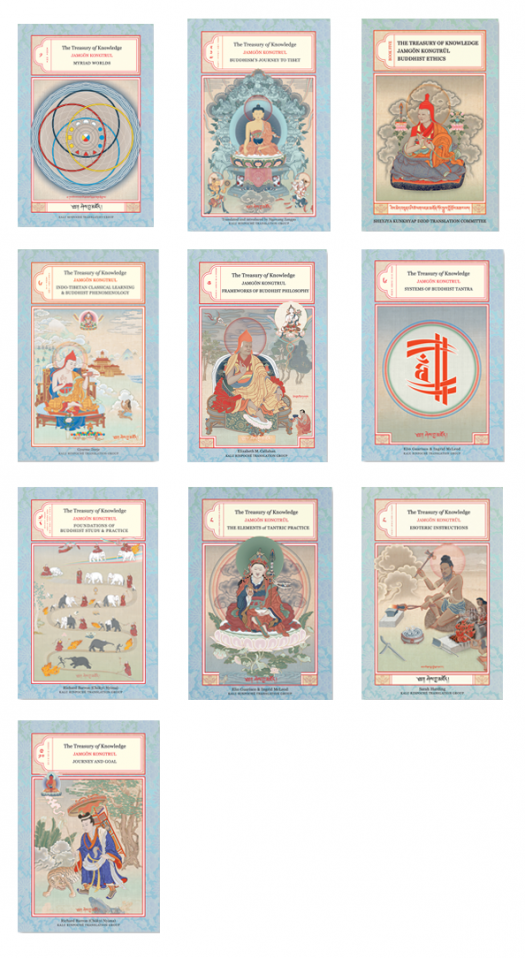
In Tibetan religious literature, Jamgön Kongtrül’s Treasury of Knowledge in ten books stands
out as a unique, encyclopedic masterpiece embodying the entire range of Buddhist teachings
as they were preserved in Tibet. In his monumental Treasury of Knowledge, Jamgön Kongtrül
presents a complete account of the major lines of thought and practice that comprise Tibetan
Buddhism.

The Treasury of Knowledge: Book One
The Treasury of Knowledge: Books Two, Three, and Four
The Treasury of Knowledge: Book Five
The Treasury of Knowledge: Book Six, Parts One and Two
The Treasury of Knowledge: Book Six, Part Three
The Treasury of Knowledge: Book Six, Part Four
The Treasury of Knowledge: Book Seven and Book Eight, Parts One and Two
The Treasury of Knowledge: Book Eight, Part Three
The Treasury of Knowledge: Book Eight, Part Four
The Treasury of Knowledge: Books Nine and Ten

by Jamgön Kongtrül Lodro Taye translated by Kalu Rinpoche Translation Group

Dalai Lama Lam Rim Teachings

screen shot 2012-12-16 at 9.42.36 pm


Teachings in Mundgod, Karnataka, India from November 30 to December 13: His
Holiness will give fourteen days of teachings on 18 Great Stages of the Path
(Lam Rim) Commentaries, including Atisha?s Lamp for the Path to Enlightenment
(jangchup lamdron), Tsongkhapa?s Great, Middling, and Concise Treatises on the
Stages of the Path to Enlightenment (lamrim chenmo, lamrim dringpo and lamrim
dudon), and 14 other classic Lam Rim texts at Gaden Monastery and Drepung
Monastery at the request of H.E. Ling Choktrul Rinpoche and Gaden Shartse
Monastery. Contact : www.jangchuplamrim.org . See also :
www.jangchuplamrim.org/media/video/ for links to both English and Tibetan uTube
feeds, video and audio downloads.

Continuing in 2013 at Sera Monastery, in Bylakuppe. Karanataka, South India.

A delight [ redacted list ]

✓ day 1 am https://www.youtube.com/watch?v=wKmRMwBZscc
✓ day 1 pm https://www.youtube.com/watch?v=-rwQFK9c96M
✓ day 2 am https://www.youtube.com/watch?v=Up_TmvVylfc
✓ day 2 pm https://www.youtube.com/watch?v=E7l6u56WFRE
day 3 am https://www.youtube.com/watch?v=6f3d_6OiEVw
day 3 pm https://www.youtube.com/watch?v=L-7BCsHJw6k
day 4 am https://www.youtube.com/watch?v=oB-O5v2B4-8
day 4 pm https://www.youtube.com/watch?v=8O3_F5MCkBA
day 5 am https://www.youtube.com/watch?v=tGPHmsNt4Fw
day 5 pm https://www.youtube.com/watch?v=hX8LeHBI6Jw
day 6 am https://www.youtube.com/watch?v=ius4jHJj8fg
day 6 pm https://www.youtube.com/watch?v=8UmoH7FWGyg
day 7 am https://www.youtube.com/watch?v=CG_jK68G5kY
day 7 pm https://www.youtube.com/watch?v=FHK_GY3R7nA
day 8 am https://www.youtube.com/watch?v=hCpFrgimQB0
day 8 pm https://www.youtube.com/watch?v=Rqsd_tZOlE0
day 9 am https://www.youtube.com/watch?v=mNVB0op-THg
day 9 pm https://www.youtube.com/watch?v=mt04KzcysFk
day 10 am https://www.youtube.com/watch?v=LOFLCC_uDug
day 10 pm https://www.youtube.com/watch?v=TaIi9WT4tBg
day 11 am http://www.youtube.com/watch?v=LOru32ogh0E
day 11 pm https://www.youtube.com/watch?v=2xKNjogv0OI
day 12 am https://www.youtube.com/watch?v=Kwr_aGPi0e0
day 12 pm http://www.youtube.com/watch?v=QoK2xIwlqVs
day 13 am
day 13 pm
day 14 am
day 14 pm

Location: Mundgod, Karnataka, India

Shen Yueh

Three poems by Shen Yueh on Buddhism circa 480 [ translated by Richard Mather in The Age of Eternal Brilliance ]

165 Harmonizing with a Poem by General of the [Left Palace] Guard, Wang [Seng-ch’ien] on an Expository Lecture [on the Dharma]

The Wondrous Wheel has ceased its former turning,
And the Jeweled Trees have not yet started sounding.
But the Sweet Dew, for whomever preached,
Achieves the One, and points the way to bodhi-mind.
Dimly obscure, the Mystic Path appears remote;
Its lofty meanings, taken as a whole, become a forest.
But the Seven [Bodhi-] flowers screen sensations and their attributes;
The Eight Releases wash away [the scent of] perfumed collars.

166 The Four City Gates

The sixfold dragon team has bolted with the chariot [of the sun],
And the two rats [of night and day] have in their turn hastened its light.
In one’s declining years, how hard to care or help;
The sunset body – oh how easily it withers and decays!

167 The Fast of the Eight Prohibitions

Because of the Commandments I’ve grown weary of Samsara.
Yet, accustomed to the Hinderances, I follow dust and filth.
The Way of the Four Truths is hard to open;
Doorways to the Eightfold Path still tightly shut.
Attaining Truth was never easy to aspire to,
But only after losing the True Way does one then know the risks.
Misguided forays now have been repeated time and time again;
Sudden enlightenment itself is not without gradations.


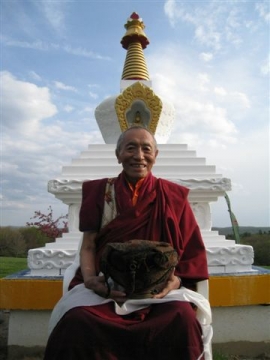
Khenchen Palden Sherab Rinpoche parinirvana

e1277046779


On the auspicious day of Medicine Buddha, June 19, 2010 at 8:07pm, our most beloved teacher and one of the great scholars and masters in Nyingmapa Buddhism, Khenchen Palden Sherab Rinpoche passed into parinirvana peacefully and beautifully. All stages of meditation were perfectly demonstrated according to the teachings of the Buddha and Guru Padmasambhava, and as Khenchen Rinpoche himself taught for so many years. He entered fearlessly without any emotion or attachment, joyfully and with confidence at his home, Arya Palo Ling, in the presence of his beloved brother, Venerable Khenpo Tsewang Dongyal Rinpoche, and Jomo Lorraine, and during the sangha’s practice of Vajrasattva in the glorious Copper-colored Temple at Palden Padma Samye Ling monastery. Surrounded by every lush spring quality of gentle breezes, birds singing, flowers blooming, and deer playing in the meadows, he remains in thugdam meditation.

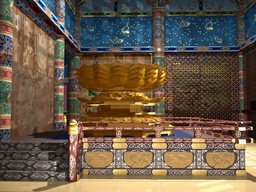
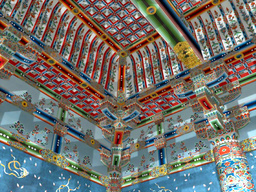
Byodouin in Uji City

byodouin2

byodouin1


These images are a computer reconstruction of what the original interior was like in a Buddhist temple located in Kyoto Prefecture in Japan. Colors are based on analysis of what remains of the existing material. No date is given for what time period this represents. Articles cited are unfortunately only in Japanese.

http://goo.gl/Yrdv and http://goo.gl/RGTL