 |
 |
 |
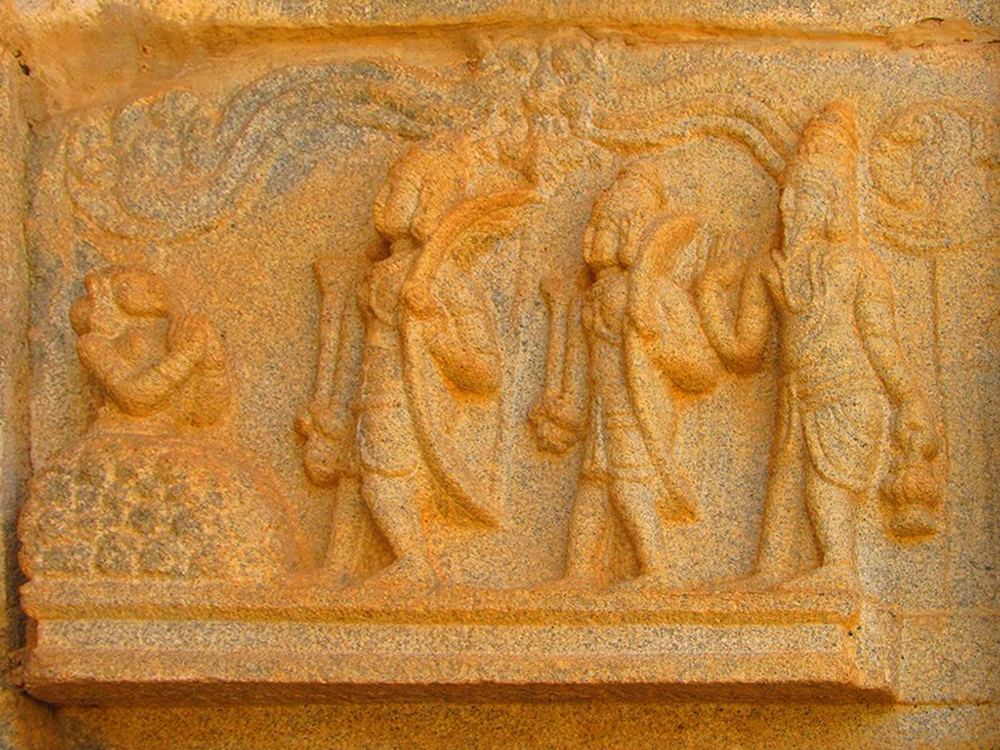 |
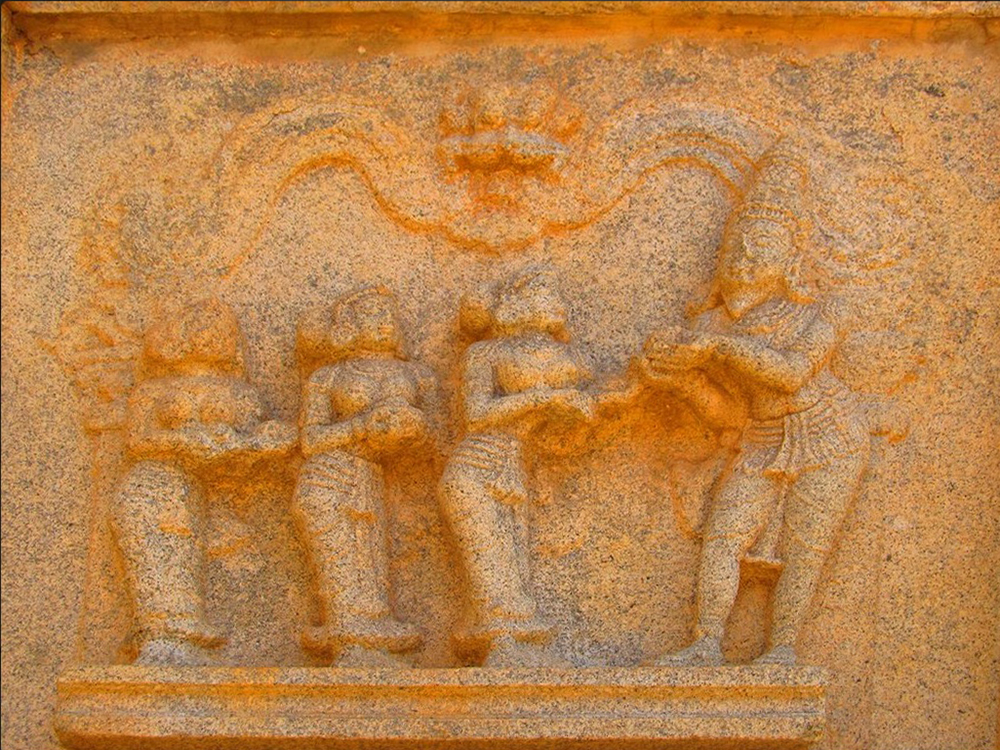
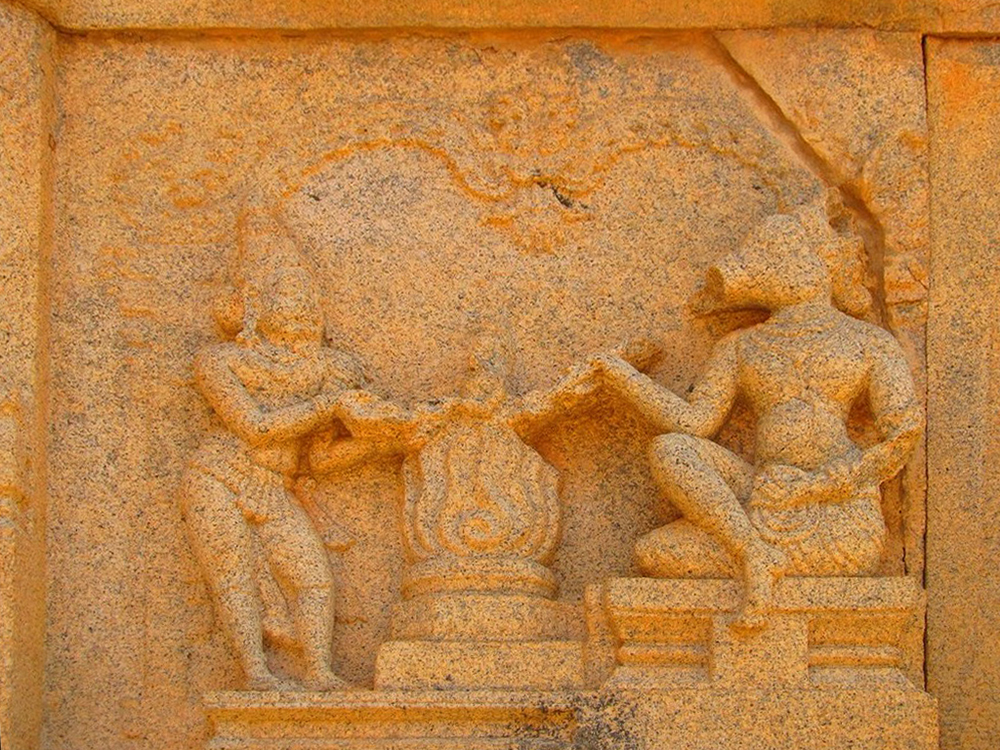
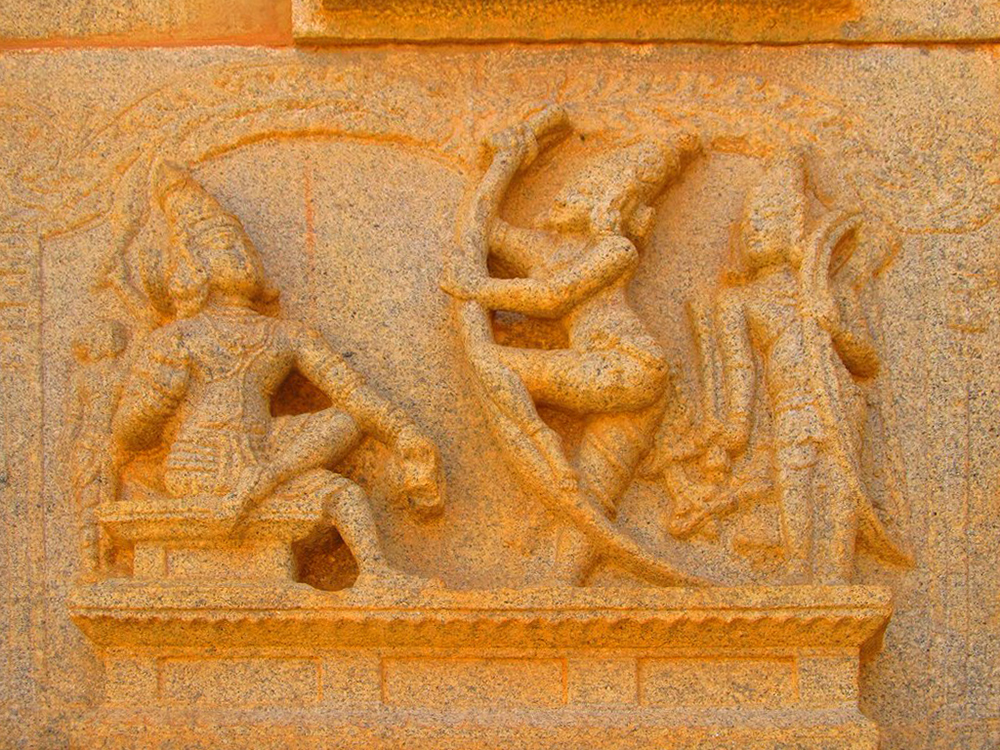
images thanks to Arjun Kumar @Hiddenheritage
|
|
|
|
images thanks to Arjun Kumar @Hiddenheritage
thanks to @ambrin_hayat
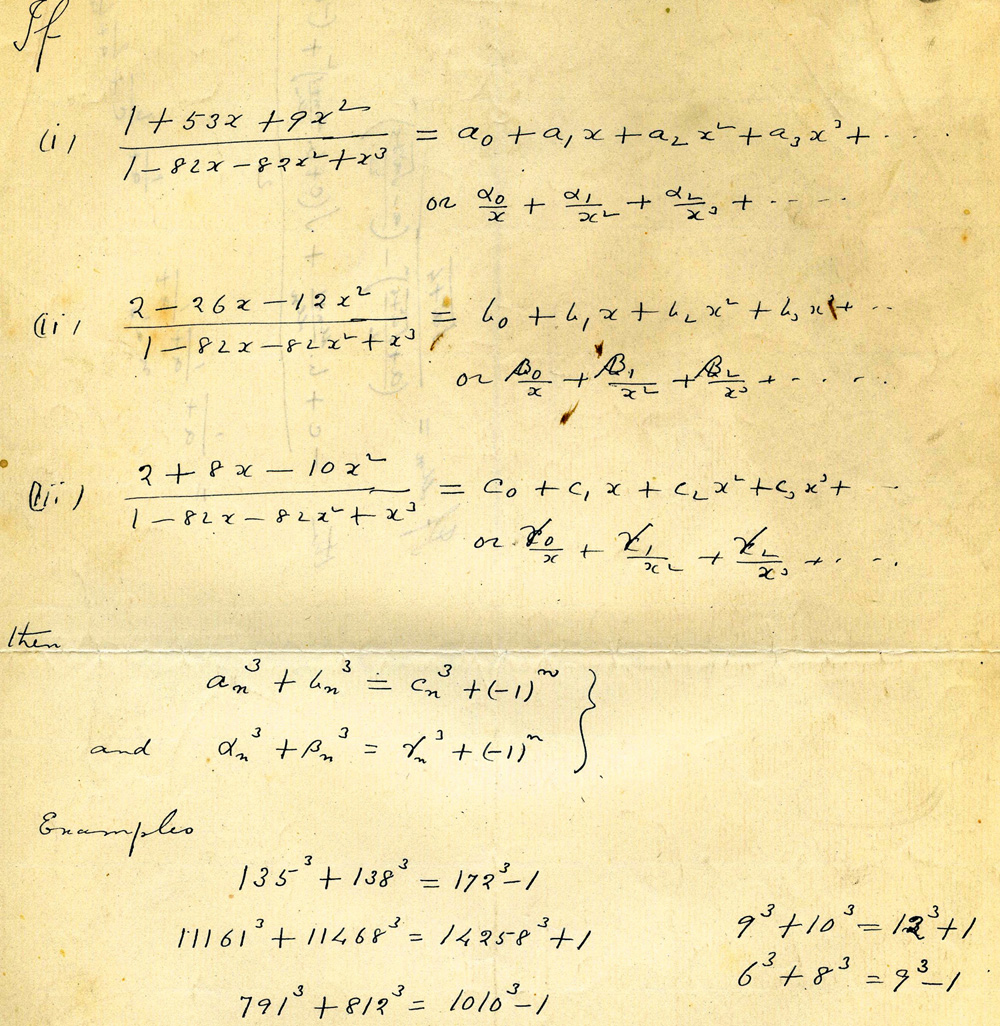
Ramanujan’s manuscript. The representations of 1729 as the sum of two cubes appear in the bottom right corner. The equation expressing the near counter examples to Fermat’s last theorem appears further up: α3 + β3 = γ3 + (-1)n. Image courtesy Trinity College library.
see article
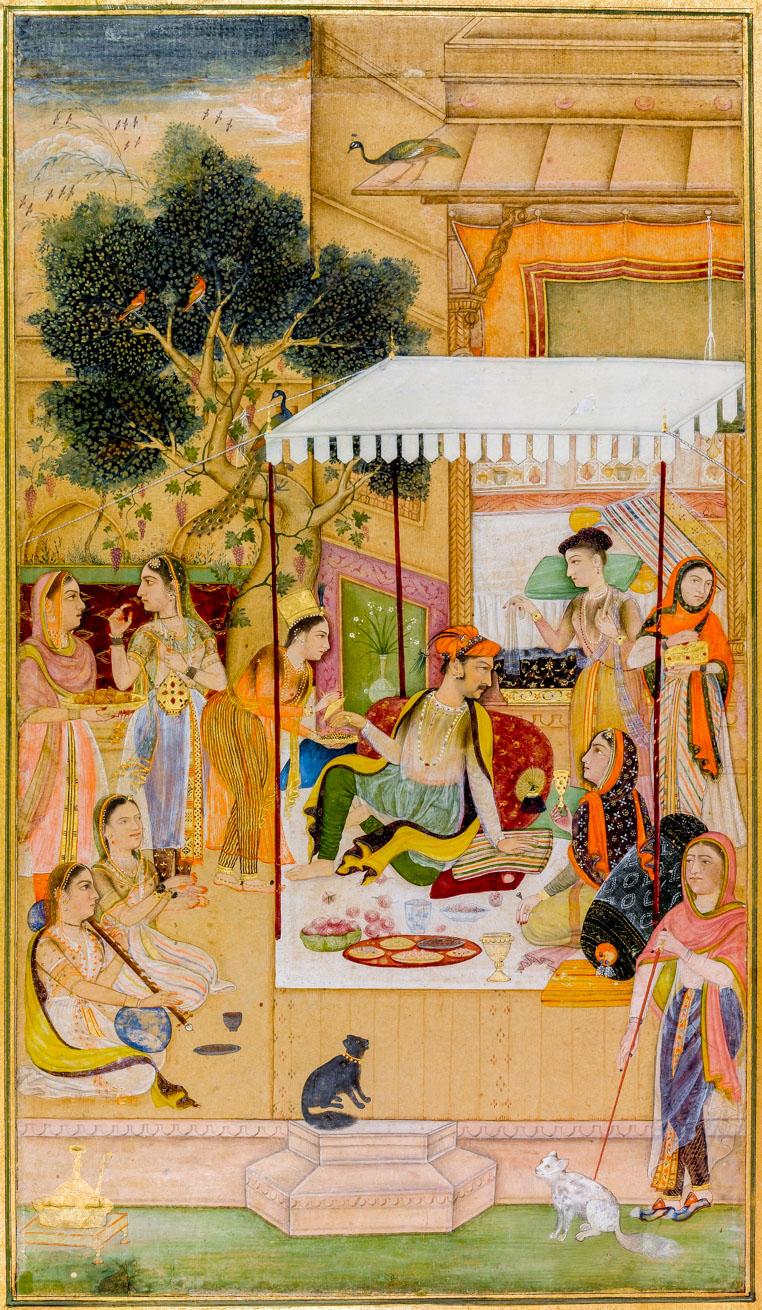
Jahangir and the Cats | Mughal | 1630
thanks to @dpanikkar
 |
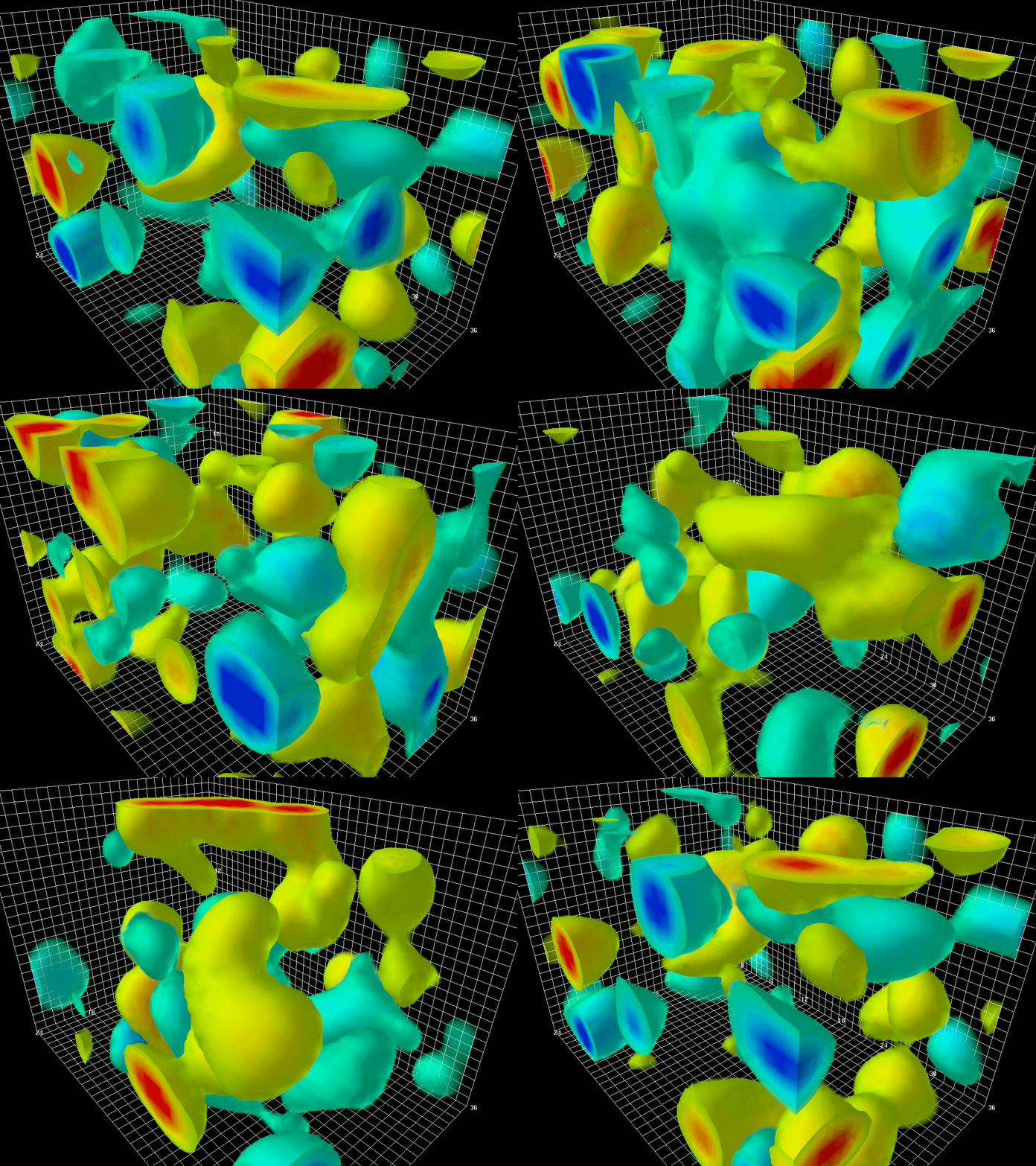 |
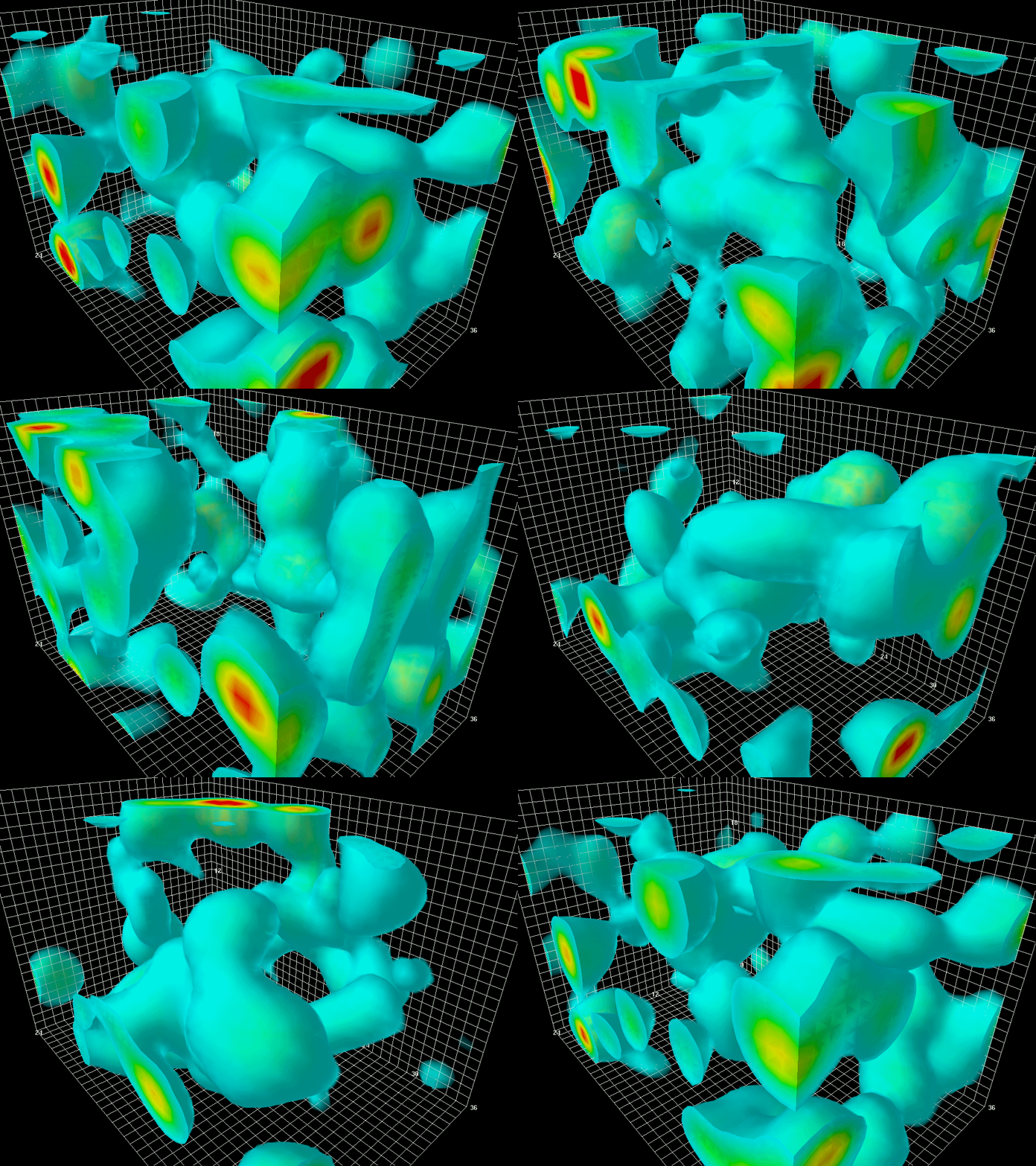
The animations above illustrate the typical four-dimensional structure of gluon-field configurations averaged over in describing the vacuum properties of QCD [ Quantum Chromodynamics ]. The volume of the box is 2.4 by 2.4 by 3.6 fm, big enough to hold a couple of protons. Contrary to the concept of an empty vacuum, QCD induces chromo-electric and chromo-magnetic fields throughout space-time in its lowest energy state. After a few sweeps of smoothing the gluon field (50 sweeps of APE smearing), a lumpy structure reminiscent of a lava lamp is revealed. This is the QCD Lava Lamp. The action density (left) and the topological charge density (right) are displayed. The former is similar to an energy density while the latter is a measure of the winding of the gluon field lines in the QCD vacuum.
The animation at left was featured in Prof. Frank Wilczek’s 2004 Nobel Prize Lecture.
Visualizations : Centre for the Subatomic Structure of Matter (CSSM) and Department of Physics, University of Adelaide, 5005 Australia | link

Just as a precious jewel, the sky, and water are by nature pure, likewise the tathagatagarbha or dharmadhatu is by nature always free from the defilement of the mental poisons and thus utterly pure. Whereas this is the meaning of the essence, the cause that completely purifies the adventitious defilements consists of devotion towards the Mahayana Dharma, of highest discriminative or analytical wisdom realizing the non-existence of a self, of limitless samadhi endowed with bliss, and of great compassion focusing on sentient beings as its point of reference. The realization arising from these [purifying causes] is to be known as enlightenment.
Buddha Nature
The Mahayana Uttaratantra Shastra with Commentary
by Maitreya
translated by Rosemarie Fuchs page 119
Shambhala [ publisher ] description :
All sentient beings without exception have buddha nature—the inherent purity and perfection of the mind, untouched by changing mental states. Thus there is neither any reason for conceit in deeming oneself better than others nor any reason for self-contempt, thinking of oneself as inferior and unable to reach enlightenment. This seeing is obscured by veils which are removable and do not touch the inherent purity and perfection of the nature of the mind as such. The Mahayana Uttaratantra Shastra, one of the Five Treatises said to have been dictated to Asanga by the Bodhisattva Maitreya, presents the Buddha’s definitive teachings on how we should understand this ground of enlightenment and clarifies the nature and qualities of buddhahood.
Jamgön Kongtrül Lodro Thaye (1813–1899), the profoundly learned and realized master who compiled what are known as the “Five Great Treasures,” wrote the outstanding commentary to the Mahayana Uttaratantra Shastra translated here. Called The Unassailable Lion’s Roar, it presents Maitreya’s text as a background for the Mahamudra teachings in a way that is especially clear and easy to understand.
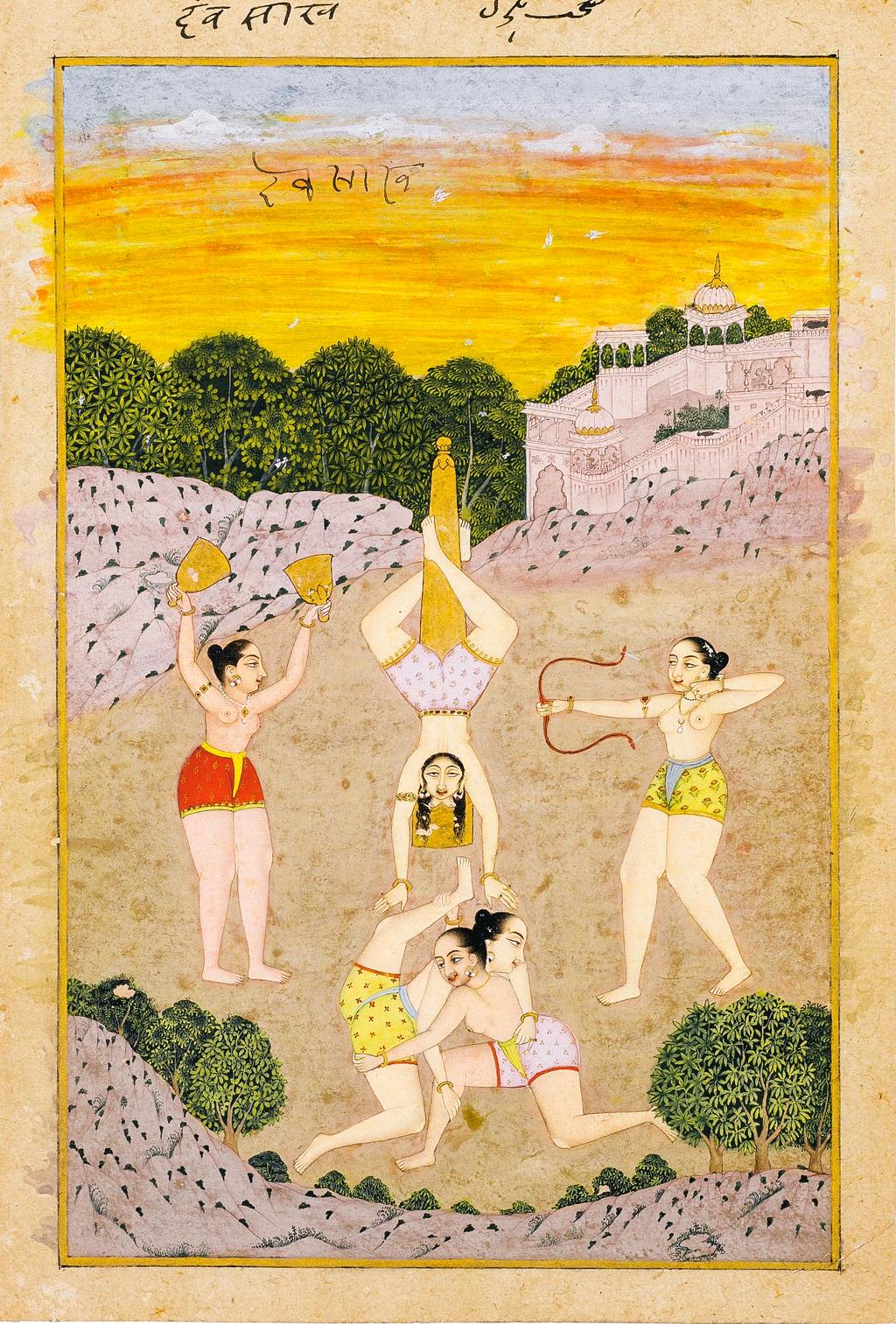
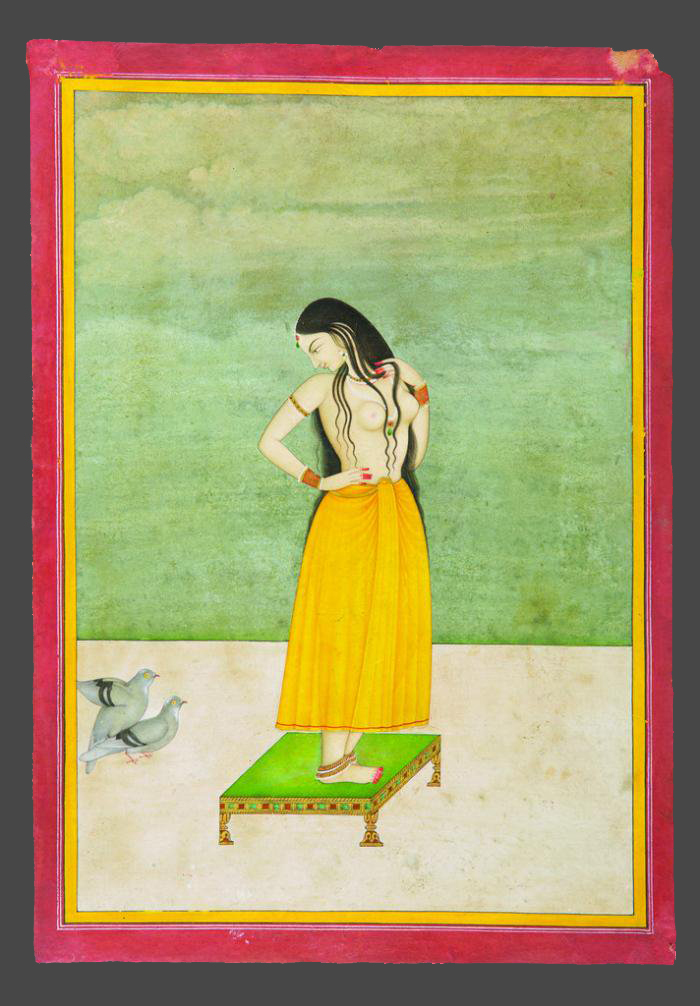
Ragini Desakhya. Rajasthan, 18th C. Sotheby’s
thanks to @dpanikkar
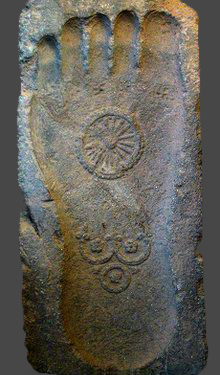
relic depicting footprint of the Buddha with Dharmachakra and triratna, 1st century CE, Gandhāra
thanks to @RareHistorical
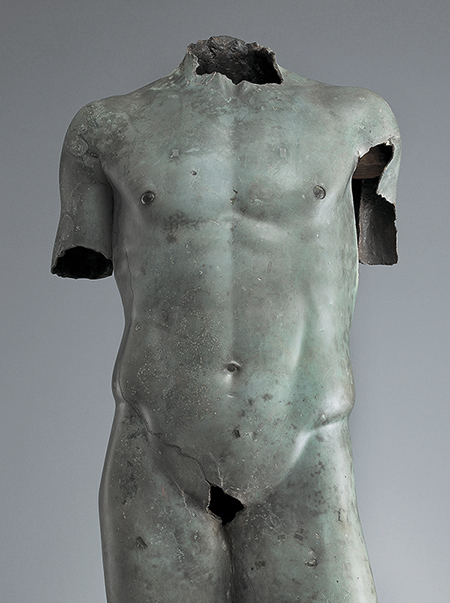
Torso of a Youth (“The Vani Torso”) (detail), Colchian, 100–200 B.C. Bronze, 41 3/4 in. high. Georgian National Museum, Vani Archaeological Museum-Reserve. Photo: Rob Harrell, Freer Gallery of Art and Arthur M. Sackler Gallery, Smithsonian Institution
 |
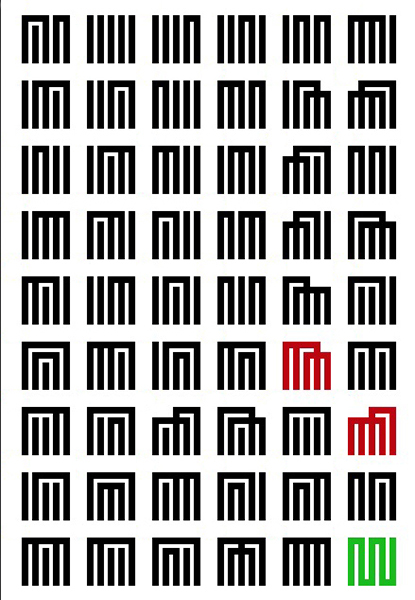 |
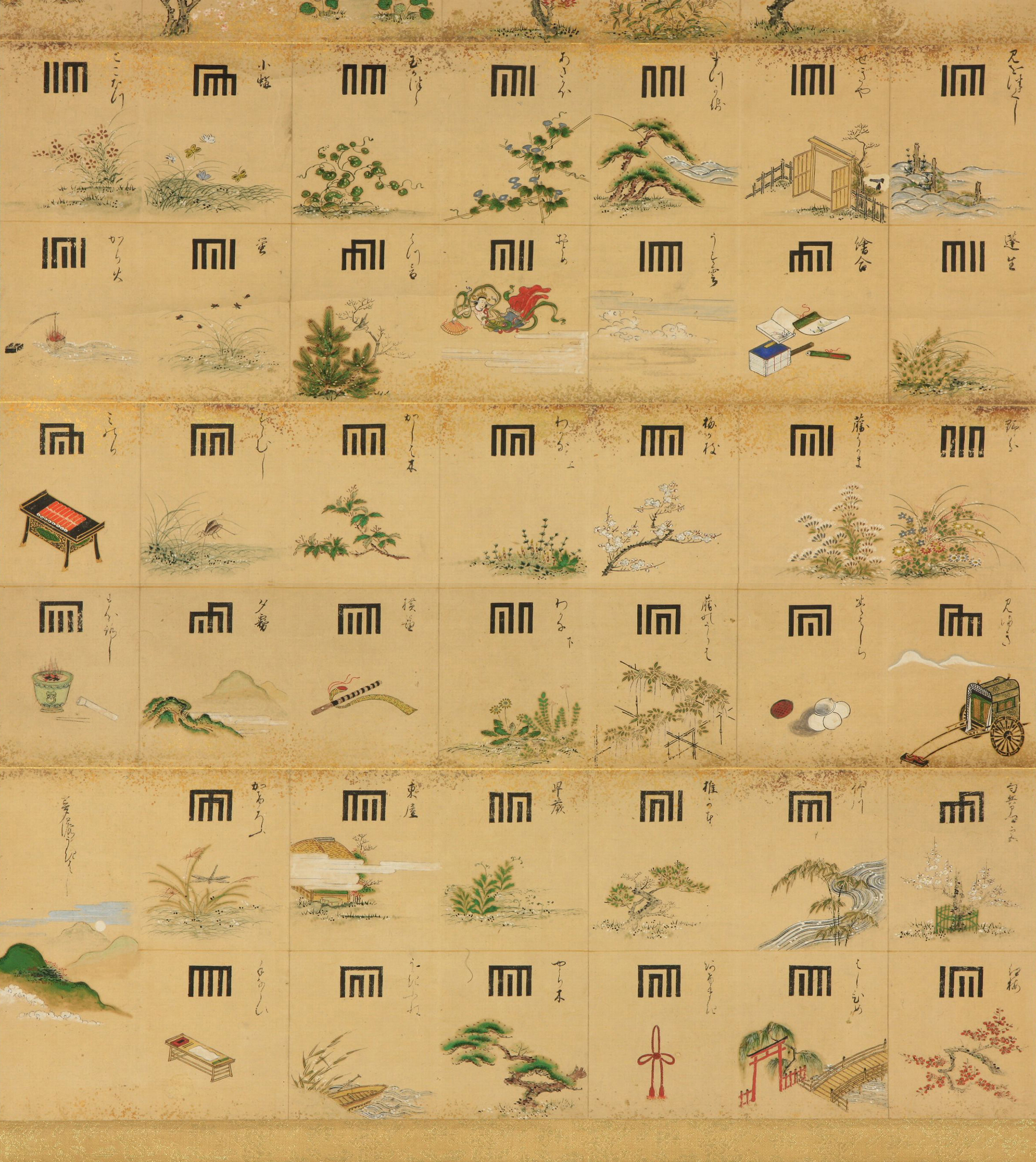
Participants sit near one another and take turns smelling incense from a censer as they pass it around the group. Participants comment on and make observations about the incense, and play games to guess the incense material. Genjikō is one such game, in which participants are to determine which of five prepared censers contain different scents, and which contain the same scent. Players’ determinations (and the actual answers) are recorded using genji-mon linear patterns, the elements of which allude to chapters in the Tale of Genji.

Heian-kyō grid plan, depicted after a two-block expansion to the north created the “northern zone” (kitanohe) in the 9th century.
from : Kyoto An Urban History of Japan’s Premodern Capital by Matthew Stavros
 |
 |
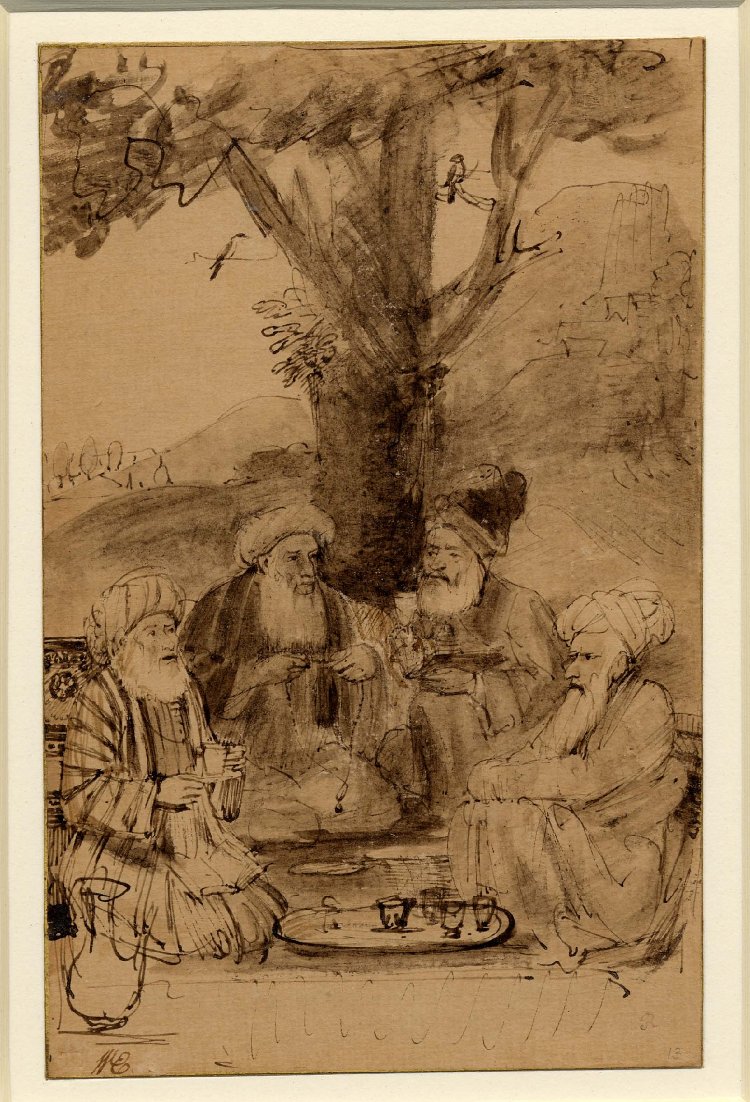
Four Orientals seated under a tree, c 1656-1661. Photo credit: British Museum
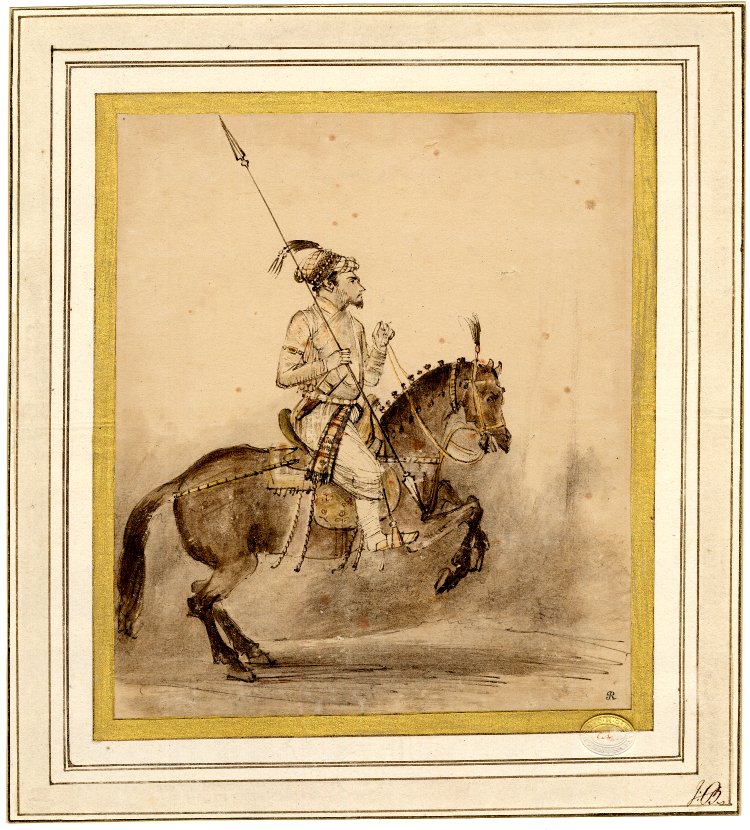
A Mughal nobleman on horseback, c 1656-1661. Photo credit: British Museum
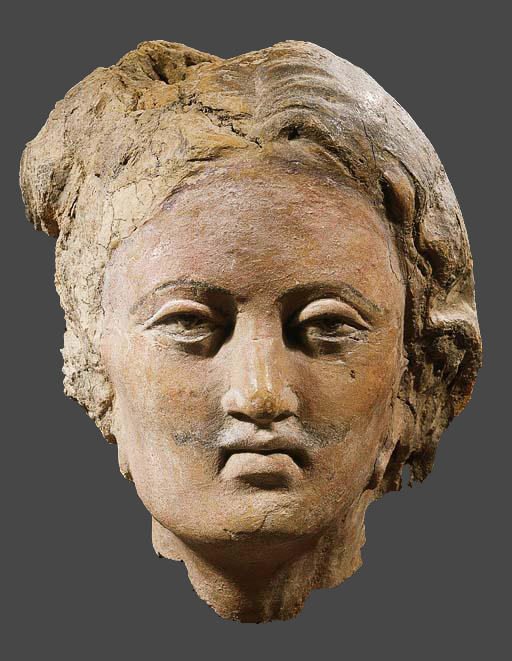
Terracotta male head : Gandhara 4th-5th century CE [ image thanks to @ambrin_hayat ]
 |
 |
 |
 |
Chōjū-jinbutsu-giga (鳥獣人物戯画, lit. “Animal-person Caricatures”), commonly shortened to Chōjū-giga (鳥獣戯画, lit. “Animal Caricatures”) is a famous set of four picture scrolls, or emakimono, belonging to Kōzan-ji temple in Kyoto, Japan. The Chōjū-giga scrolls are also referred to as Scrolls of Frolicking Animals and Scrolls of Frolicking Animals and Humans in English. Some think that Toba Sōjō created the scrolls; however, it is hard to verify this. The right-to-left reading direction of Chōjū-jinbutsu-giga is still a standard method seen in modern manga and novels in Japan. Chōjū-jinbutsu-giga is also credited as the oldest work of manga. The scrolls are now entrusted to the Kyoto National Museum and Tokyo National Museum. They date from the 12th and 13th centuries.
As opened, the first scroll illustrates anthropomorphic rabbits and monkeys bathing and getting ready for a ceremony, a monkey thief runs from animals with sticks and knocks over a frog from the lively ceremony. Further on, the rabbits and monkeys are playing and wrestling while another group of animals participate in a funeral and frog prays to Buddha as the scroll closes. [ wikipedia entry ]
Currently all four are on exhibit in Kyoto.
Links to viewing the entire scrolls :
1. http://www.chojugiga2015.jp/emaki/index.html
2. http://www.chojugiga2015.jp/emaki/index2.html
3. http://www.chojugiga2015.jp/emaki/index3.html
4. http://www.chojugiga2015.jp/emaki/index4.html

Muhammad Shah | 1750 | Institut du Monde Arabe, Paris
image thanks to @dpanikkar