
By Pinpin [GFDL or CC BY-SA 3.0], via Wikimedia Commons
By Pinpin [GFDL or CC BY-SA 3.0], via Wikimedia Commons
 |
| Please join us in celebrating the fifth birthday of His Holiness Drubwang Pema Norbu’s Yangsi, Migyur Dechen Garwang Zilnon Dorje, on January 7. On this joyous occasion, we will hold a Grand Rigdzin Dupa Tsok Offering and prayers for His Holiness’ long life, followed by a dinner party in the evening featuring traditional food, performances, a DJ and dancing!
To help fulfill His Holiness’ aspiration of establishing a Palyul Dharma Center in New York City, the donation for the dinner party in the evening will be $35 per person, which will go towards the purchase of a new space for the Center. Thanks to everyone’s kind and dedicated support, we are much closer to reaching this goal – please come and join this effort so we may soon bring His Holiness’ vision to life. Date/Time: Venue: |
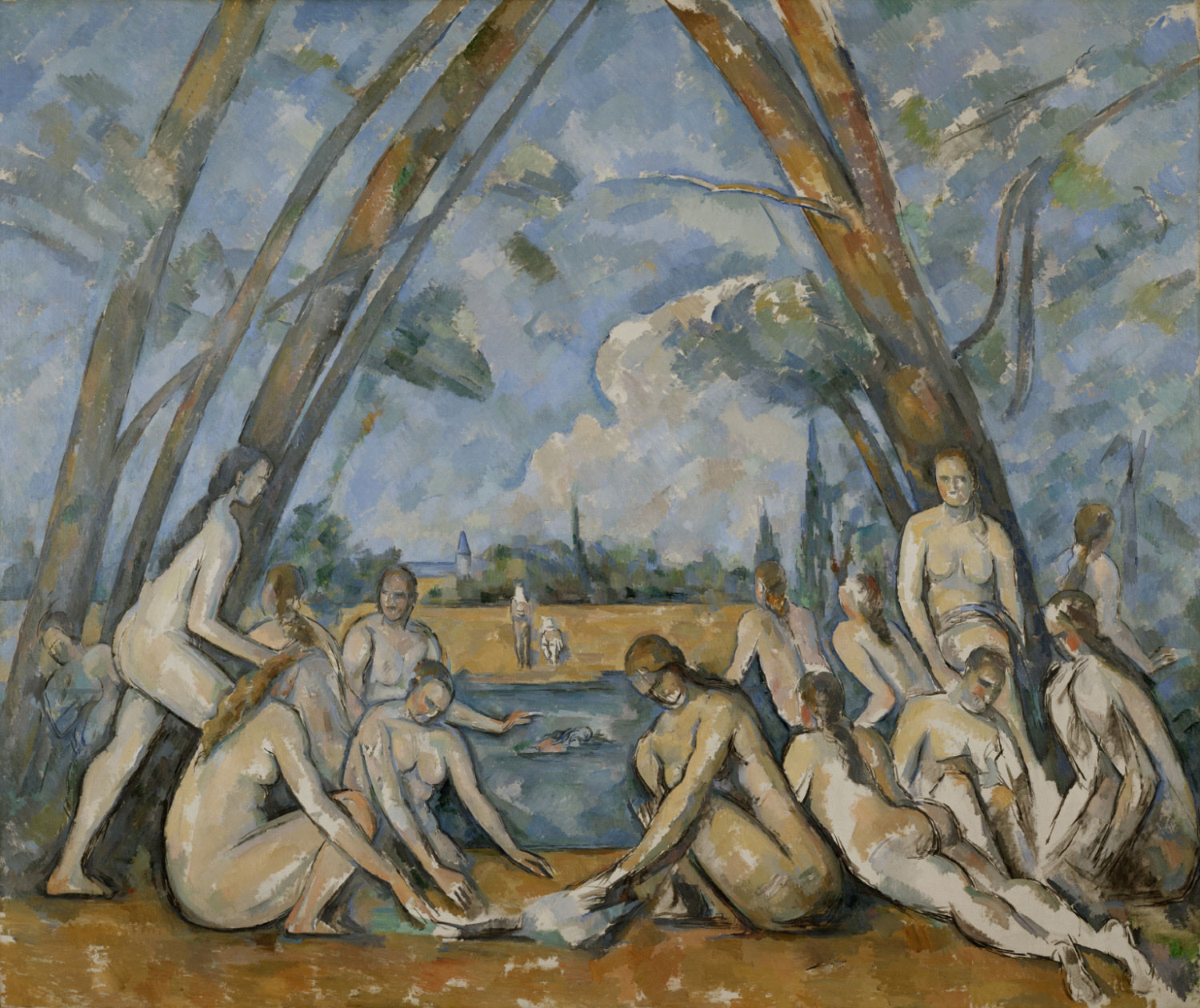 |
| Les Grandes Baigneuses | 1900-1906 | 210.5 × 250.8 cm | The Philadelphia Museum of Art |
 |
| Les Grandes Baigneuses | 1894-1905 | 127.2 x 196.1 cm | The National Gallery [ London ] |
 |
| Les Grandes Baigneuses | 1895–1906 | 132.4 x 219.1 cm | The Barnes Foundation |
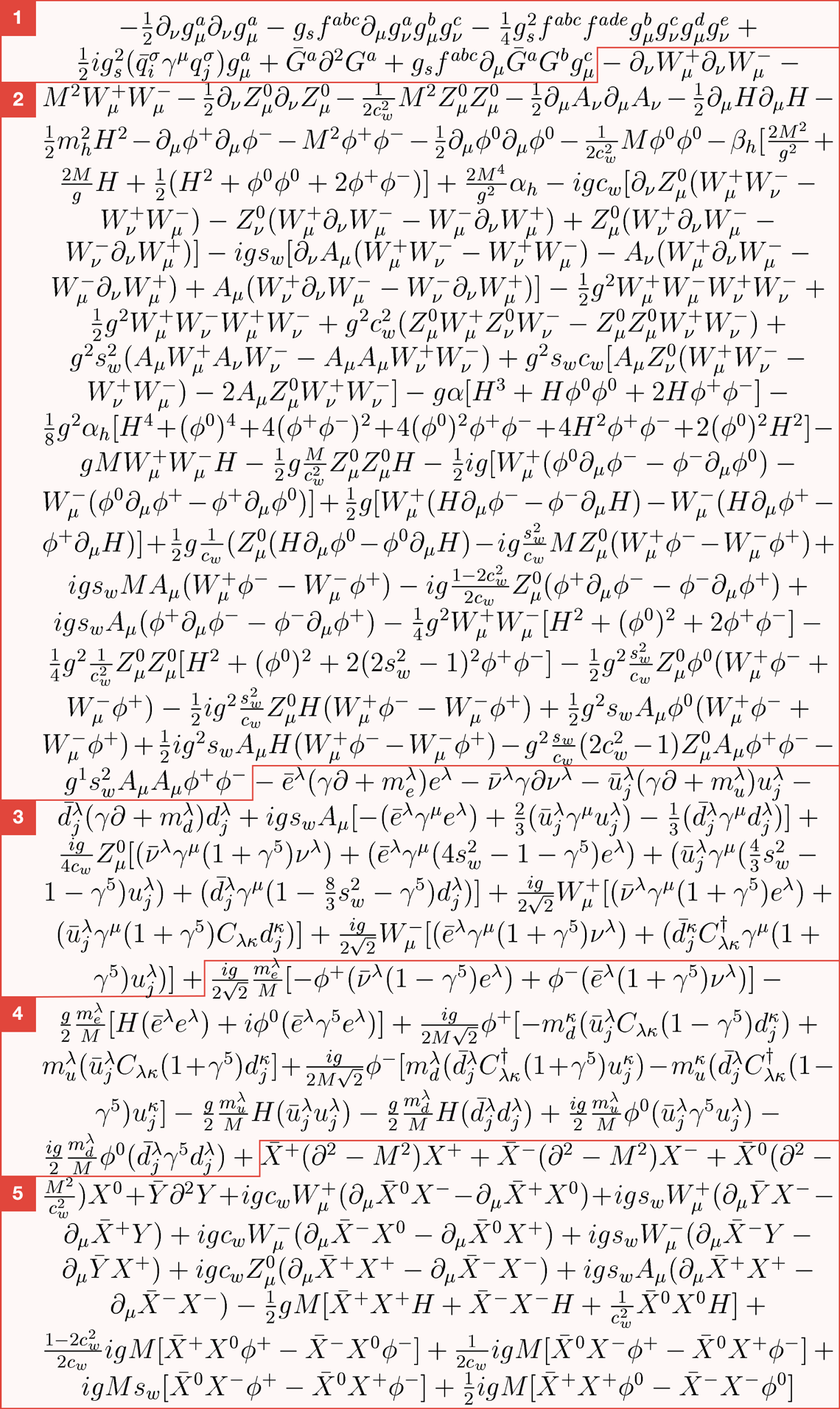
Section 1
These three lines in the Standard Model are ultraspecific to the gluon, the boson that carries the strong force. Gluons come in eight types, interact among themselves and have what’s called a color charge.
Section 2
Almost half of this equation is dedicated to explaining interactions between bosons, particularly W and Z bosons.
Bosons are force-carrying particles, and there are four species of bosons that interact with other particles using three fundamental forces. Photons carry electromagnetism, gluons carry the strong force and W and Z bosons carry the weak force. The most recently discovered boson, the Higgs boson, is a bit different; its interactions appear in the next part of the equation.
Section 3
This part of the equation describes how elementary matter particles interact with the weak force. According to this formulation, matter particles come in three generations, each with different masses. The weak force helps massive matter particles decay into less massive matter particles.
This section also includes basic interactions with the Higgs field, from which some elementary particles receive their mass.
Intriguingly, this part of the equation makes an assumption that contradicts discoveries made by physicists in recent years. It incorrectly assumes that particles called neutrinos have no mass.
Section 4
In quantum mechanics, there is no single path or trajectory a particle can take, which means that sometimes redundancies appear in this type of mathematical formulation. To clean up these redundancies, theorists use virtual particles they call ghosts.
This part of the equation describes how matter particles interact with Higgs ghosts, virtual artifacts from the Higgs field.
Section 5
This last part of the equation includes more ghosts. These ones are called Faddeev-Popov ghosts, and they cancel out redundancies that occur in interactions through the weak force.
Thomas Gutierrez, an assistant professor of Physics at California Polytechnic State University, transcribed the Standard Model Lagrangian for the web. He derived it from Diagrammatica, a theoretical physics reference written by Nobel Laureate Martinus Veltman. In Gutierrez’s dissemination of the transcript, he noted a sign error he made somewhere in the equation.
in Symmetry

“The safest general characterization of the European philosophical tradition is that it consists of a series of footnotes to Plato.”
Alfred North Whitehead (1929), Process and Reality, Part II, Chap. I, Sect. I
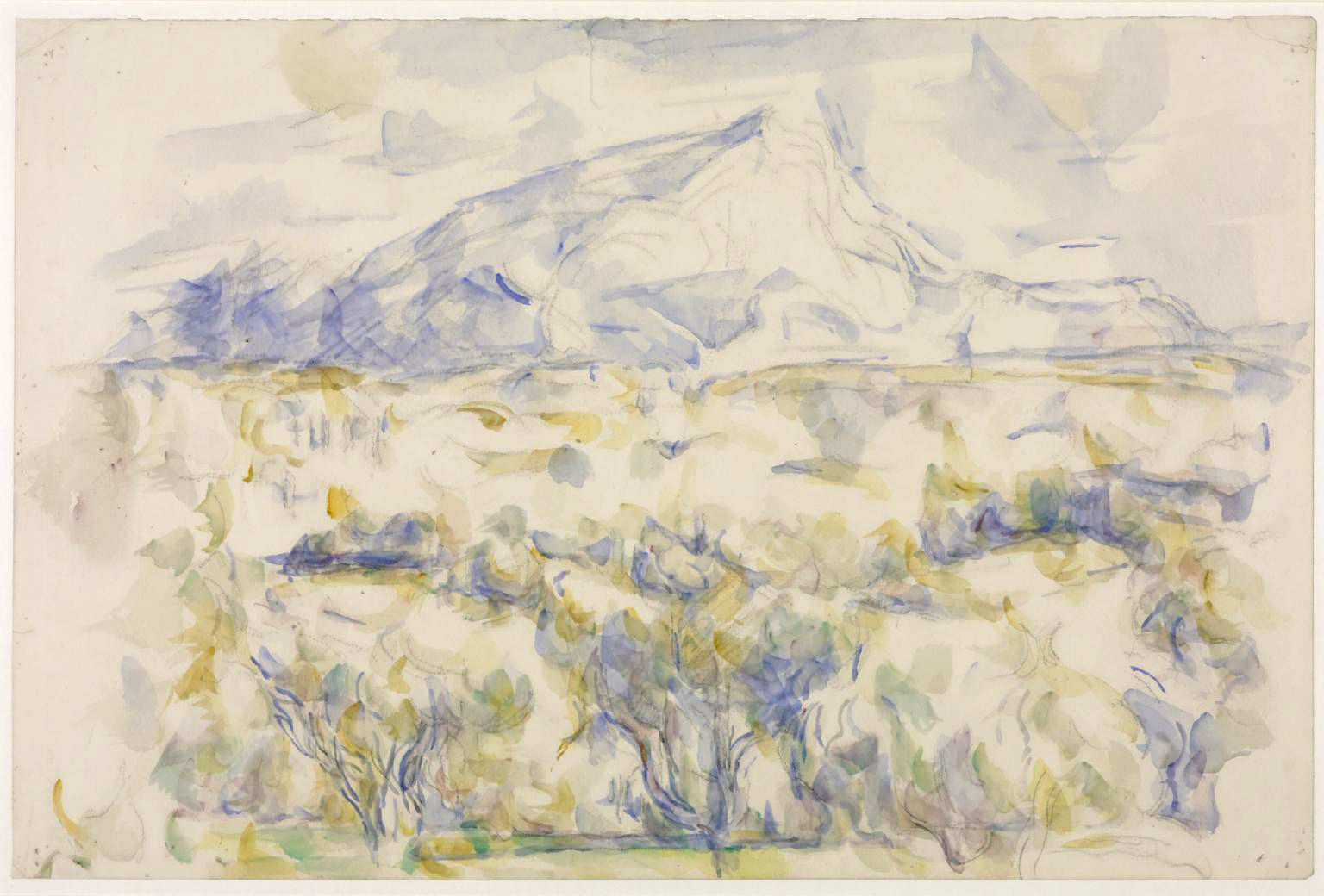
“Le principal dans un tableau est de trouver la juste distance. La couleur avait à exprimer toutes les ruptures dans la profondeur. C’est la qu’on reconnaît le talent d’un peintre.” – Cézanne
Paul Cézanne [ 1839–1906 ] | Montagne Sainte Victoire [ 1905–06 ]
Watercolour on paper 362mm x 549 mm | Tate Gallery [ Bequeathed by Sir Hugh Walpole 1941 ]
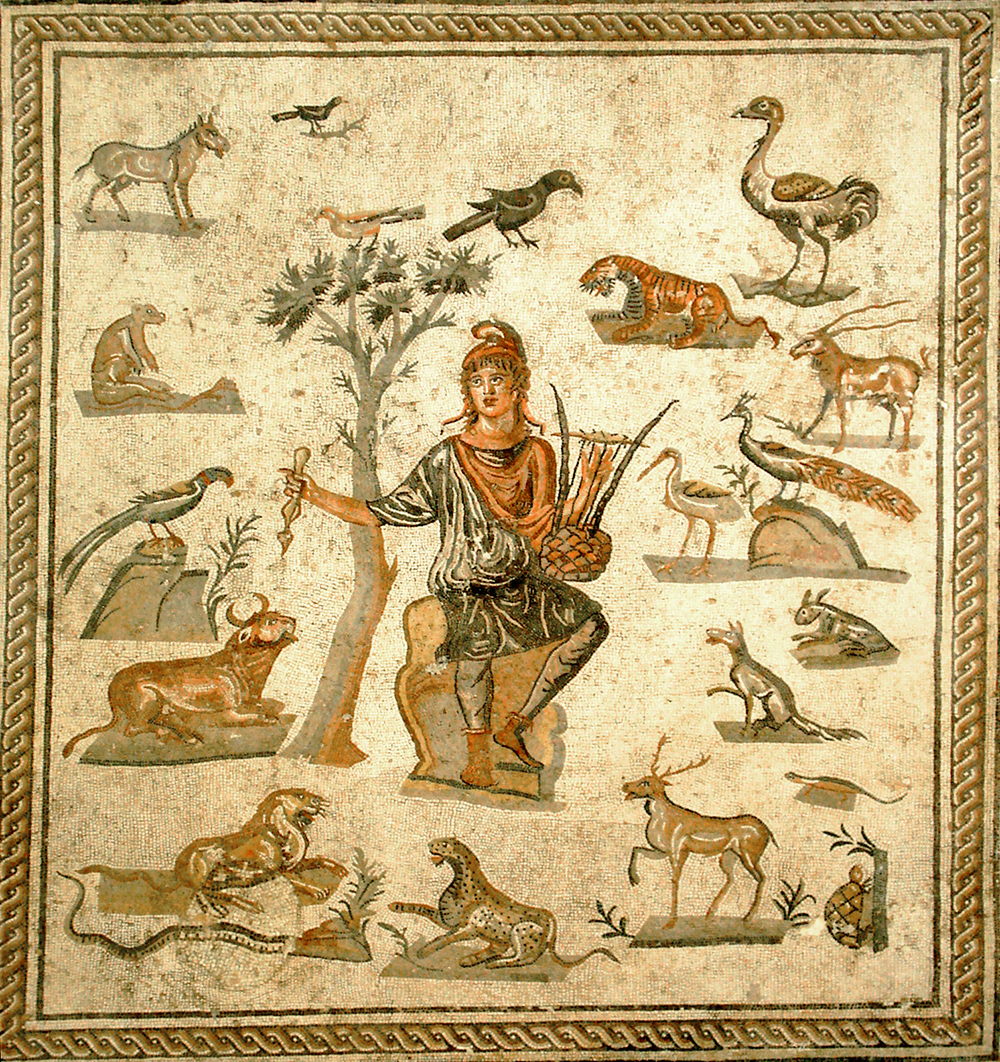
Orpheus surrounded by animals. Ancient Roman floor mosaic, from Palermo, now in the Museo archeologico regionale di Palermo. Picture by Giovanni Dall’Orto.

One of the oldest [ca. 75-125 A.D] and most complete diagrams from Euclid’s Elements of Geometry is a fragment of papyrus found among the remarkable rubbish piles of Oxyrhynchus in 1896-97 by the renowned expedition of B. P. Grenfell and A. S. Hunt. It is now located at the University of Pennsylvania. The diagram accompanies Proposition 5 of Book II of the Elements, and along with other results in Book II it can be interpreted in modern terms as a geometric formulation of an algebraic identity – in this case, that ab + (a-b)2/4 = (a+b)2/4
“If a straight line be cut into equal and unequal segments, the rectangle contained by the unequal segments of the whole together with the square on the straight line between the points of section is equal to the square on the half.” (from the classic translation of T. L. Heath)
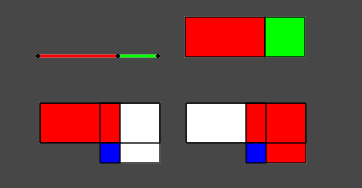

image thanks to @zpr27
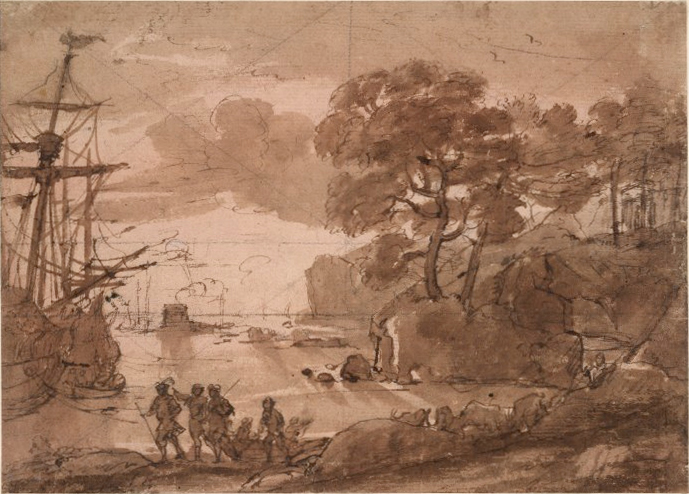
Claude Lorrain 1650
192 mm x 267 mm
British Museum
Sea coast with the landing of Aeneas in Latium, preliminary drawing for the painting; figures alighting from boats in the foreground, a shepherd with flock at right, trees on the rocky cliffs at right, ships at left. c.1650 Pen and brown ink and brown wash, touched with white; on pink-tinted paper; squared with diagonals.
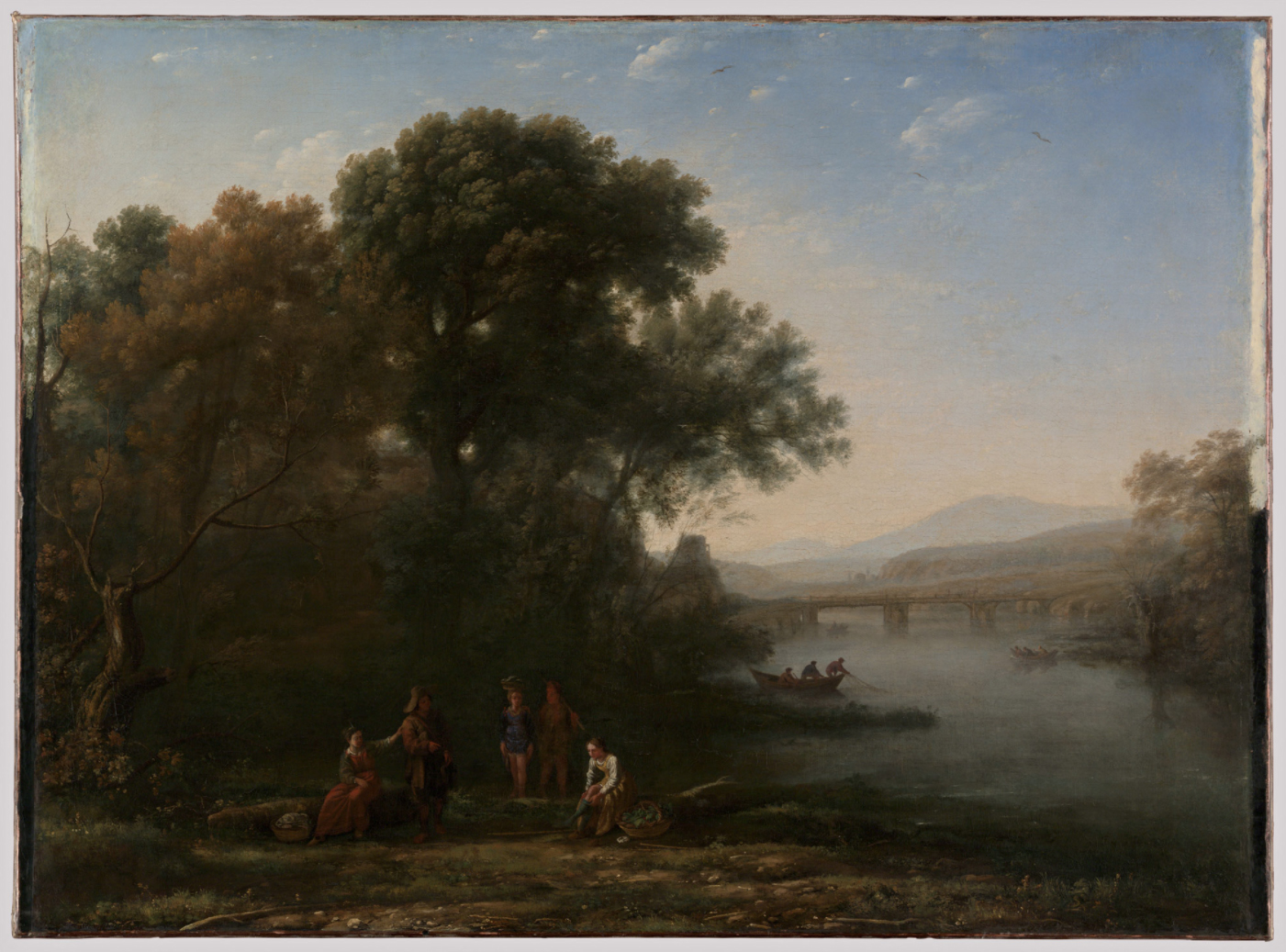
The Ford
Claude Lorrain (Claude Gellée) (French, Chamagne 1604/5?–1682 Rome)
Date: possibly 1636
Medium: Oil on canvas
Dimensions: 29 1/4 x 39 3/4 in. (74.3 x 101 cm)
MMA New York
“Quantum field theory is a very rich subject for mathematics as well as physics. But its development in the last seventy years has been mainly by physicists, and it is still largely out of reach as a rigorous mathematical theory despite important efforts in constructive field theory. So most of its impact on mathematics has not yet been felt. Yet in many active areas of mathematics, problems are studied that actually have their most natural setting in quantum field theory. Examples include Donaldson theory of four-manifolds, the Jones polynomial of knots and its generalizations, mirror symmetry of complex manifolds, elliptic cohomology, and many aspects of the study of affine Lie algebras.
To a certain extent these problems are studied piecemeal, with difficulty in understanding the relations among them, because their natural home in quantum field theory is not now part of the mathematical theory. To make a rough analogy (Figure1), one has here a vast mountain range, most of which is still covered with fog. Only the loftiest peaks, which reach above the clouds, are seen in the mathematical theories of today, and these splendid peaks are studied in isolation, because above the clouds they are isolated from one another. Still lost in the mist is the body of the range, with its quantum field theory bedrock and the great bulk of the mathematical treasures.”
this is most lovely….
see the entire film here