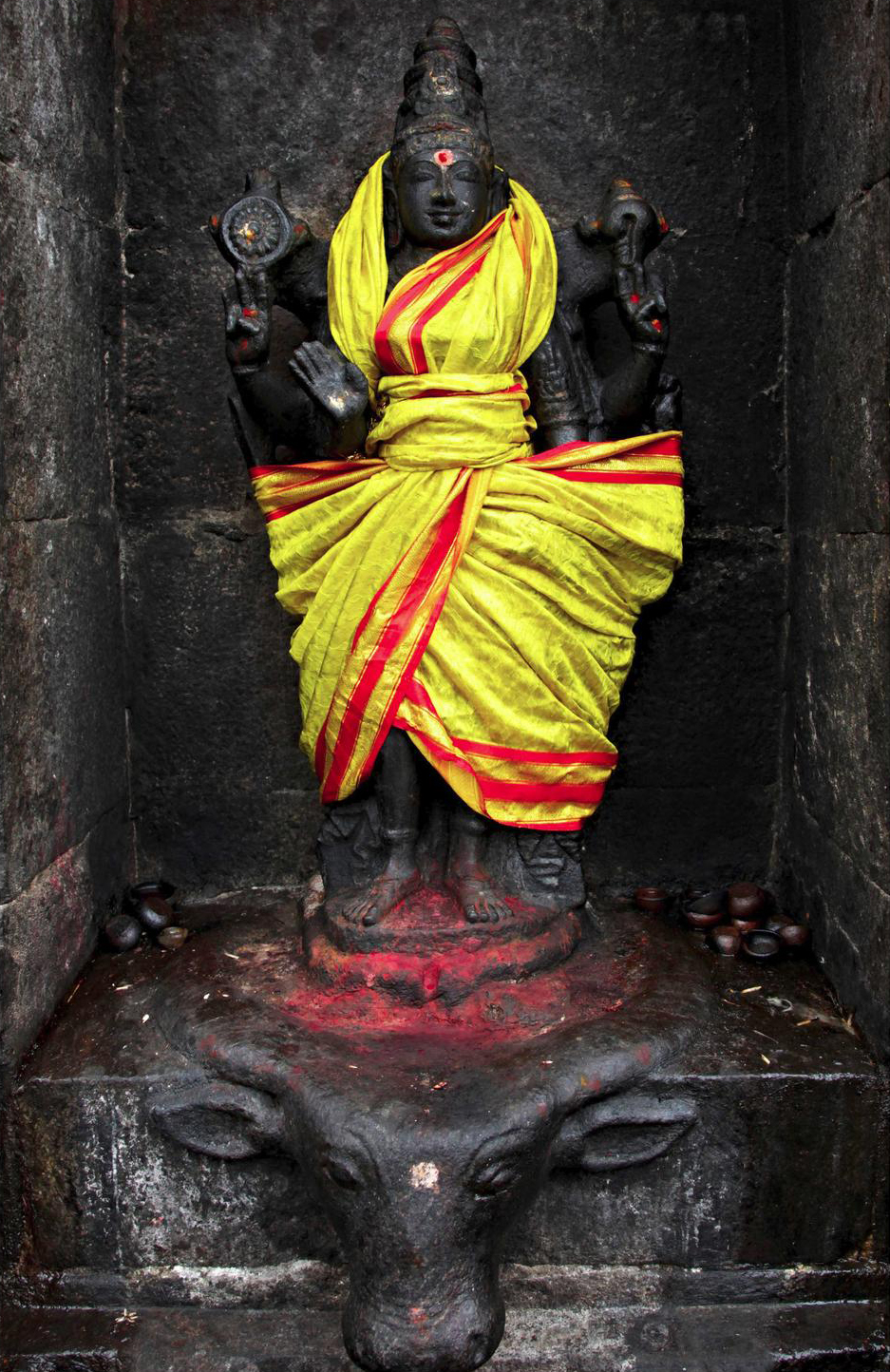
Durga as mahish-asura-mardini – Airavateswarar temple – Darasuram
thanks to @dpanikkar
from wikipedia :
Durga (Hindustani pronunciation: [ˈd̪ʊrɡaː]; Sanskrit: दुर्गा), meaning “the inaccessible”[1] or “the invincible”, is the most popular incarnation of Devi and one of the main forms of the Goddess Shakti in the Hindu pantheon. Durga is the original manifested form of Mother Parvati or Adi-Parashakti. Durga is Adi-Parashakti herself. The Devi Gita, declares her to be the greatest Goddess. Thus, she is considered the supreme goddess and primary deity in Shaktism, occupying a place similar to Lord Krishna in Vaishnavism. According to Skanda Purana, the goddess Parvati accounted the name “Durga” after she killed the demon Durgamaasura. Goddess Parvati is considered to be the complete incarnation of Adi Parashakti or Goddess Durga, with all other goddesses being her incarnations or manifestations. Adi Parashakti or Mahadevi, the supreme power, is called Durga Shakti as per Devi-Mahatmya. Adi Parashakti or Devi Durga is a Hindu concept of the Ultimate Shakti or Mahashakti, the ultimate power inherent in all Creation. This is especially prevalent in the Shakta denomination within Hinduism, which worships the Goddess Devi in all her manifestations. She is Goddess Lakshmi and Goddess Saraswati in her mild form; Goddess Kali and Goddess Chandi in her wrathful form. Durga is also called Padmanabha-Sahodari and Narayani, the sister of Lord Vishnu. According to Shaivism and Shaktism She is supreme, but to bring back lord Shiva in Sansar, she was reborn in human form (Sati and Parvati) to marry Shiva. Durga gave birth to his first child Kartikeya.