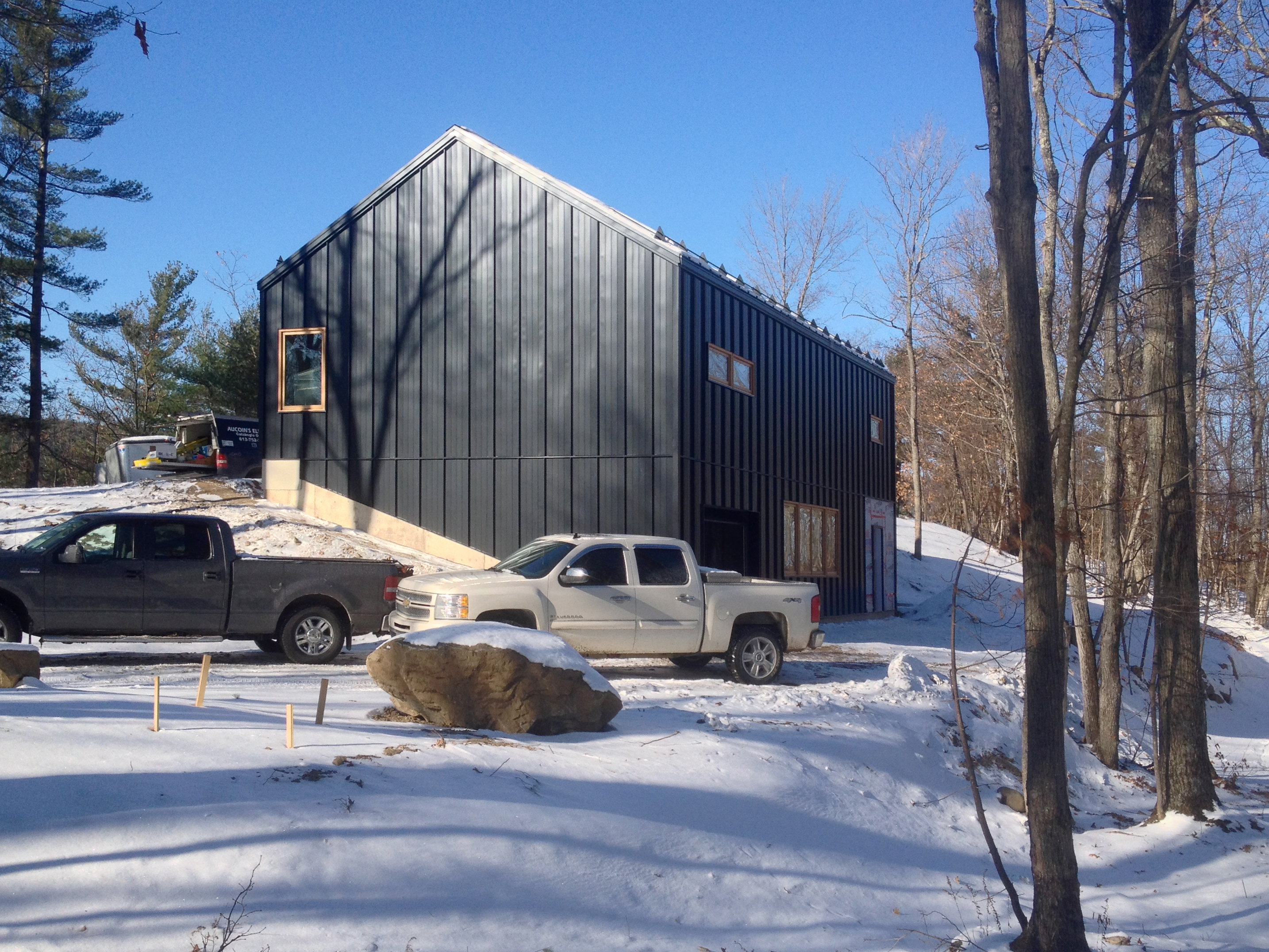
exterior / interior insulating / electrical rough in more or less done for a new studio [ this is the rear view ]
exterior / interior insulating / electrical rough in more or less done for a new studio [ this is the rear view ]
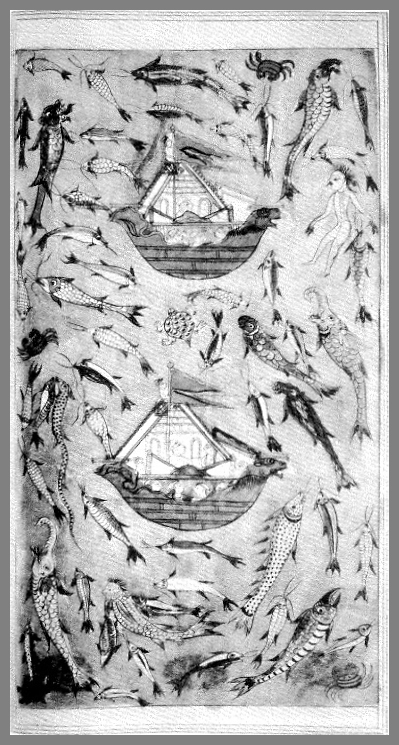
A scene depicting the hero Manohar in a boat from the Gulshan-I-‘ishq [ “The Rose Garden of Love”, a mathnawī in Deccani verse by Nuṣratī written in 1672 ]
[ illustration Indian 1815 ]
” The palace of the princess, Madmalati, and her shabistān ( chamber ) where the fairies carry Manohar are equally enchanting, while the beauty of the princess merits a detailed description, an exercise in sarāpā nigārī and nakh sikh. Thus her nose is a champā bud, her tongue a gulnār petal; her teeth are pomegranate seeds; her mouth a wine-cup; her cheeks gold-sprinkled pages; her chin rounded like a Samarqand apple; while, above the dawn-bright forehead, the gleam of pearls lining the hair parting is an unfathomed mystery. The princess’s arms are likened to lotus stems, her fingers to a cluster of sovan bananas, and her fingernails to the end of the lady-bird, while, rounding off this sarāpā, her plaited hair is compared to the Ganges river; her rumāulī ( the line of down on the stomach ) to the Godavari; her thighs are said to be banana stems; her stature like the sugarcane; her walk as graceful as an elephant’s. ”
from : Scent in the Islamic Garden : A Study of Literary Sources in Persian and Urdu [ Ali Akbar Husain ]
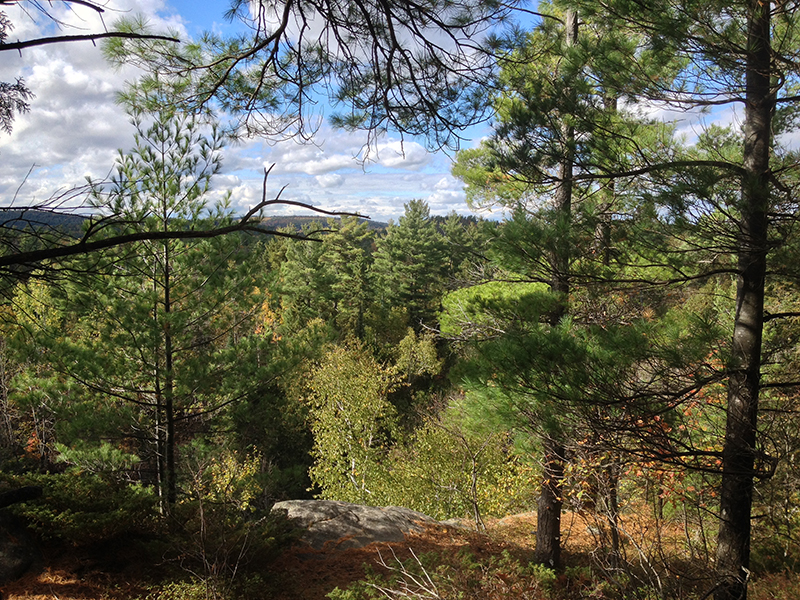
Little Pine Path – Manitou Mountain – Greater Madawaska
| Parameter | Meaning | Measured Value |
| g θW gs |
Weak coupling constant at mZ Weinberg angle Strong coupling constant at mZ |
0.6520 ± 0.0001 0.48290 ± 0.00005 1.221 ± 0.022 |
| μ2 λ |
Quadratic Higgs coefficient Quartic Higgs coefficient |
~ −10−33 ~ 1 ? |
| Ge Gμ Gτ |
Electron Yukawa coupling Muon Yukawa coupling Tauon Yukawa coupling |
2.94 × 10⁻⁶ 0.000607 0.0102156233 |
| Gu Gd Gc Gs Gt Gb |
Up quark Yukawa coupling Down quark Yukawa coupling Charm quark Yukawa coupling Strange quark Yukawa coupling Top quark Yukawa coupling Bottom quark Yukawa coupling |
0.000016 ± 0.000007 0.00003 ± 0.00002 0.0072 ± 0.0006 0.0006 ± 0.0002 1.002 ± 0.029 0.026 ± 0.003 |
| sin θ12 sin θ23 sin θ13 δ13 |
Quark CKM matrix angle Quark CKM matrix angle Quark CKM matrix angle Quark CKM matrix phase |
0.2243 ± 0.0016 0.0413 ± 0.0015 0.0037 ± 0.0005 1.05 ± 0.24 |
| θqcd | CP – violating QCD vacuum phase | < 10−9 |
| Gνe Gνμ Gντ |
Electron neutrino Yukawa coupling Muon neutrino Yukawa coupling Tau neutrino Yukawa coupling |
< 1.7 × 10⁻¹¹ < 1.1 × 10⁻⁶ < 0.10 |
| sin θ′12 sin 2θ′23 sin θ′13 δ′13 |
Neutrino MNS matrix angle Neutrino MNS matrix angle Neutrino MNS matrix angle Neutrino MNS matrix phase |
0.55 ± 0.06 ≥ 0.94 ≤ 0.22 ? |
| ρΛ ξb ξc ξν Q ns |
Dark energy density Baryon mass per photon ρb / nγ Cold dark matter mass per photon ρc / nγ Neutrino mass per photon ρν / nγ = 3⁄11 Σ mνi Scalar fluctuation amplitude δH on horizon Scalar spectral index |
(1.25 ± 0.25) × 10−123 (0.50 ± 0.03) × 10−28 (2.5 ± 0.2) × 10−28 < 0.9 × 10⁻²⁸ (2.0 ± 0.2) × 10−5 0.98 ± 0.02 |
from Dimensionless constants, cosmology and other dark matters : Max Tegmark, Anthony Aguirre, Martin J. Rees & Frank Wilczek
“Every fundamental property of nature ever measured can be computed from the 32 numbers in this table – at least in principle.” Max Tegmark in Our Mathematical Universe
Maria Callas, Orchestra and Chorus of La Scala, Milan | Recorded live on 14 April 1957
[ premiered on 26 December 1830 at the Teatro Carcano in Milan ]
La donna del lago (The Lady of the Lake) is an opera by Gioachino Rossini with a libretto by Andrea Leone Tottola (whose verses are described as “limpid” by one critic) based on the French translation of The Lady of the Lake, a narrative poem written in 1810 by Sir Walter Scott, whose work continued to popularize the image of the romantic highlands. Scott’s basic story has been noted as coming from “the hint of an incident stemming from the frequent custom of James V, the King of Scotland, of walking through the kingdom in disguise”.
It was the first of the Italian operas to be based on Scott’s romantic works, and it was “deeply influential in the development of Italian romantic opera” to the extent that by 1840 (barely 20 years after this opera), there were 25 Italian operas based on his works, the most famous being Donizetti’s Lucia di Lammermoor of 1835. Others in German, French and English followed.
Written for the Teatro San Carlo in Naples, this was the seventh of nine operas which Rossini wrote for that house between 1815 and 1822. A successful premiere on 24 October 1819 led to many performances throughout major European venues (as well as being presented in Cuba and by major South America houses) until about 1860, after which the opera disappeared until 1958. In modern times, performances have been given fairly frequently.
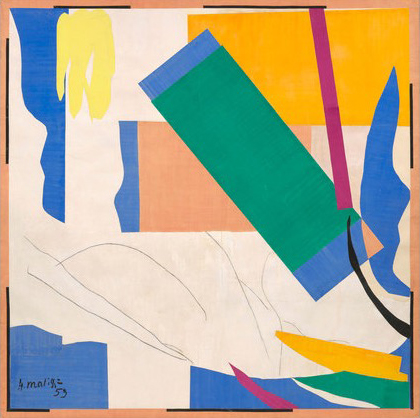
Henri Matisse (French, 1869–1954). Memory of Oceania. Nice-Cimiez, Hôtel Régina, summer 1952–early 1953. Gouache on paper, cut and pasted, and charcoal on paper mounted on canvas, 9′ 4″ x 9′ 4 7/8″ (284.4 x 286.4 cm). The Museum of Modern Art, New York.
The Enthronement ceremony of HH the 4th Drubwang PEMA NORBU Rinpoche. The 13th Throne holder of PALYUL Monastery.
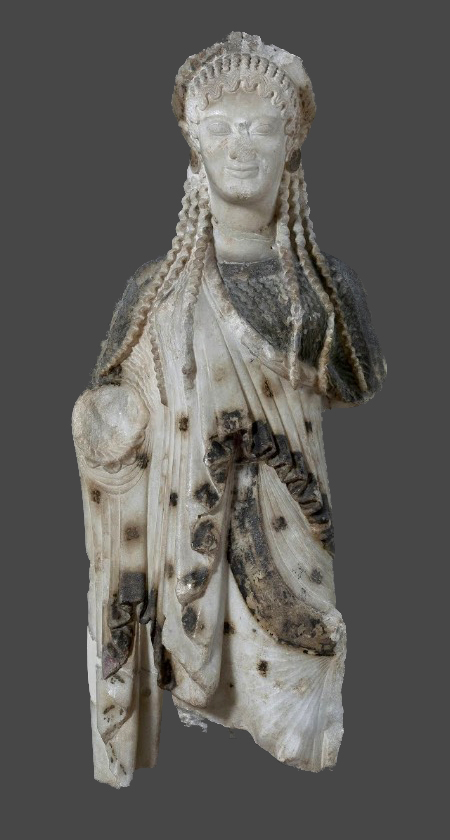
The Chian Kore ~ 510 BC | Acropolis Museum
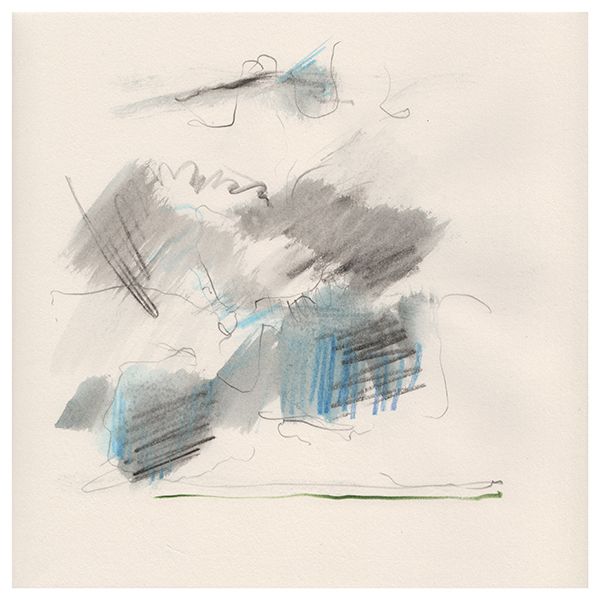
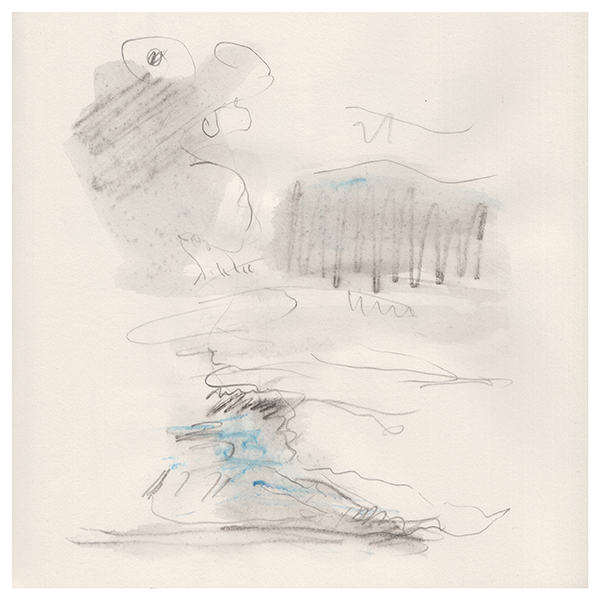
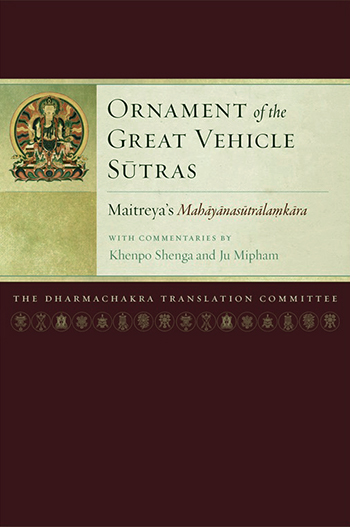
Sentient beings are brought to maturation through three forms of generosity: giving all, giving equally, and giving tirelessly. Bodhisattvas do not have even one iota of their own body or enjoyments that they are not willing to give to others if they see that it would help the other person to do so. They give all that they possess.
Moreover, their generosity does not simply benefit others by supplying them with the particular thing that is given. It benefits others in this life by completely fulfilling their wishes, and, as it also matures them and establishes them in virtue, which is the cause of the fulfillment of one’s wishes, it benefits them in future lives as well. Thus, bodhisattvas establish these beings in lasting happiness by planting the seed of liberation. In this way, generosity matures sentient beings by helping them in two ways, insofar as there are both temporary and lasting benefits.
Moreover, this generosity is practiced with equal regard for all. Since there are no biases in terms of the recipients’ moral standing, social position, or relation to oneself, they characteristically practice giving equally.
Finally, not content with giving a confined number of material things for a certain number of years or eons, a bodhisattva never knows enough of the qualities of generosity, even were he or she to continue giving until the end of cyclic existence.
from pages 173–174
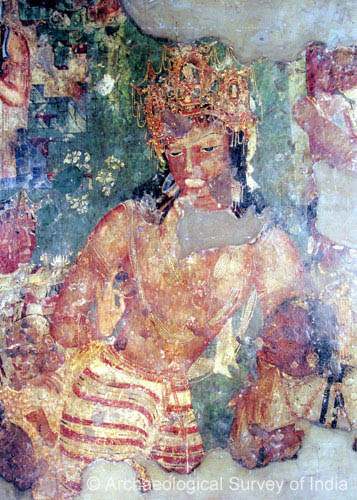
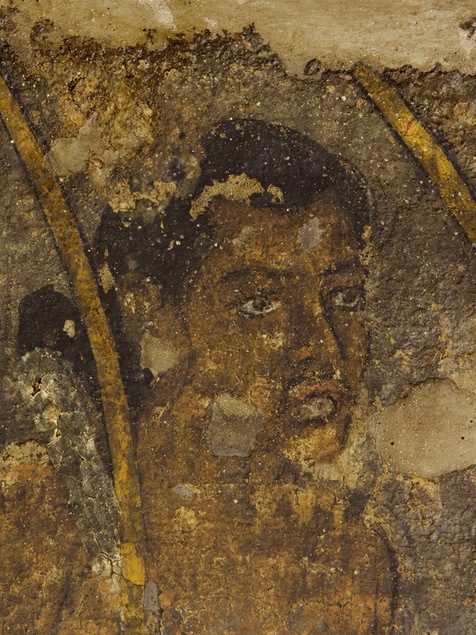
 top left : Cave 1: Bodhisattva Vajrapani, Mahayana phase
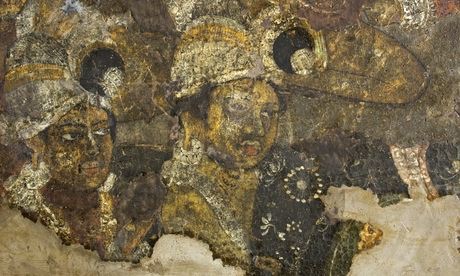
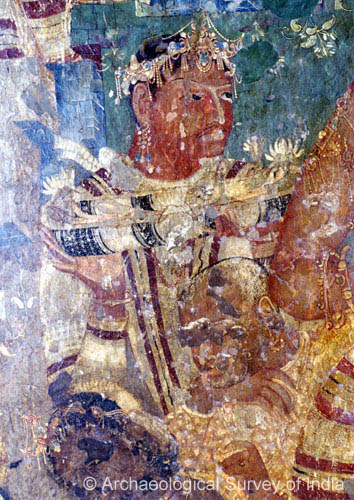
top right : Cave 1: Attendant of Bodhisattva Vajrapani, Mahayana phase
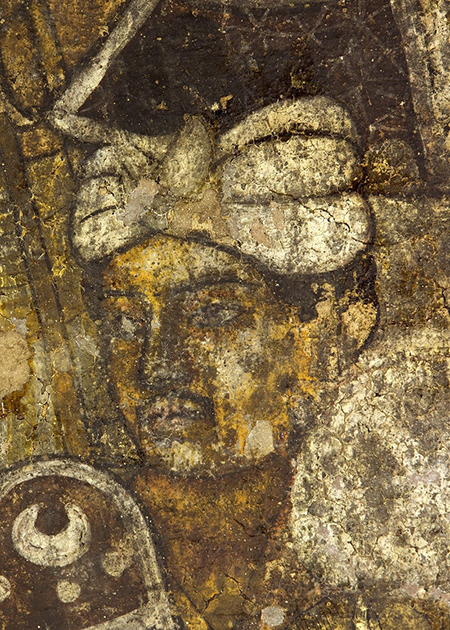
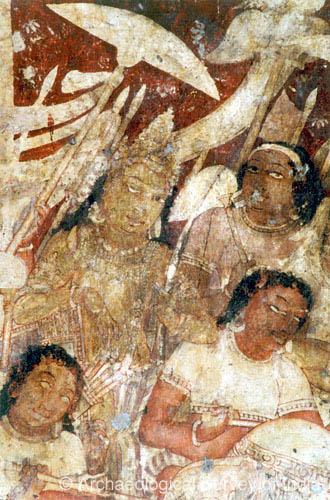
bottom left : Cave 17: Part of Simhalavadana story, Mahayana phase
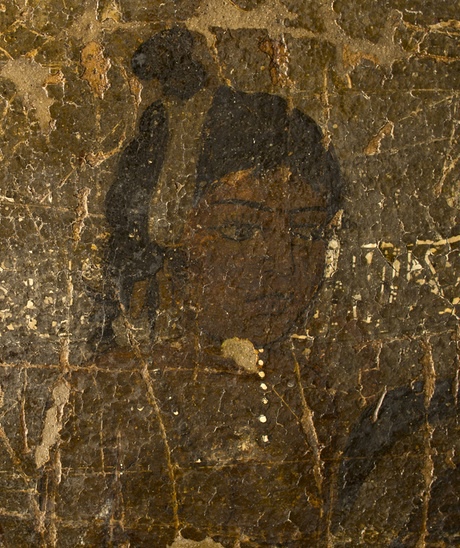
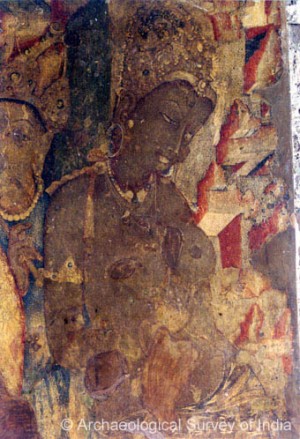
bottom right : Cave 1 : Consort of Bodhisattva, Mahayana phase
wikipedia entry :
The Ajanta Caves (Ajiṇṭhā leni; Marathi: अजिंठा लेणी) in Aurangabad district of Maharashtra, India are about 30 rock-cut Buddhist cave monuments which date from the 2nd century BCE to about 480 or 650 CE. The caves include paintings and sculptures described by the government Archaeological Survey of India as “the finest surviving examples of Indian art, particularly painting”, which are masterpieces of Buddhist religious art, with figures of the Buddha and depictions of the Jataka tales. The caves were built in two phases starting around the 2nd century BCE, with the second group of caves built around 400–650 CE according to older accounts, or all in a brief period of 460 to 480 according to the recent proposals of Walter M. Spink. The site is a protected monument in the care of the Archaeological Survey of India,[5] and since 1983, the Ajanta Caves have been a UNESCO World Heritage Site.
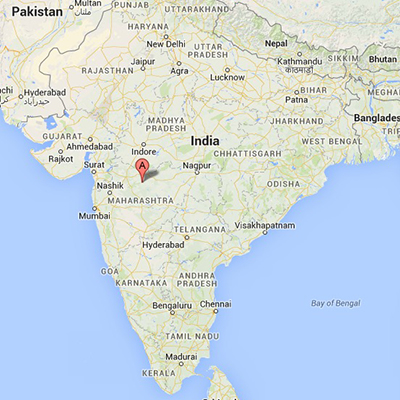
The caves are located in the Indian state of Maharashtra, near Jalgaon and just outside the village of Ajinṭhā 20°31′56″N 75°44′44″E), about 59 kilometres (37 miles) from Jalgaon railway station on the Delhi – Mumbai line and Howrah-Nagpur-Mumbai line of the Central Railway zone, and 104 kilometres (65 miles) from the city of Aurangabad. They are 100 kilometres (62 miles) from the Ellora Caves, which contain Hindu and Jain temples as well as Buddhist caves, the last dating from a period similar to Ajanta. The Ajanta caves are cut into the side of a cliff that is on the south side of a U-shaped gorge on the small river Waghur, and although they are now along and above a modern pathway running across the cliff they were originally reached by individual stairs or ladders from the side of the river 35 to 110 feet below.
The area was previously heavily forested, and after the site ceased to be used the caves were covered by jungle until accidentally rediscovered in 1819 by a British officer on a hunting party. They are Buddhist monastic buildings, apparently representing a number of distinct “monasteries” or colleges. The caves are numbered 1 to 28 according to their place along the path, beginning at the entrance. Several are unfinished and some barely begun and others are small shrines, included in the traditional numbering as e.g. “9A”; “Cave 15A” was still hidden under rubble when the numbering was done. Further round the gorge are a number of waterfalls, which when the river is high are audible from outside the caves.
The caves form the largest corpus of early Indian wall-painting; other survivals from the area of modern India are very few, though they are related to 5th-century paintings at Sigiriya in Sri Lanka. The elaborate architectural carving in many caves is also very rare, and the style of the many figure sculptures is highly local, found only at a few nearby contemporary sites, although the Ajanta tradition can be related to the later Hindu Ellora Caves and other sites.
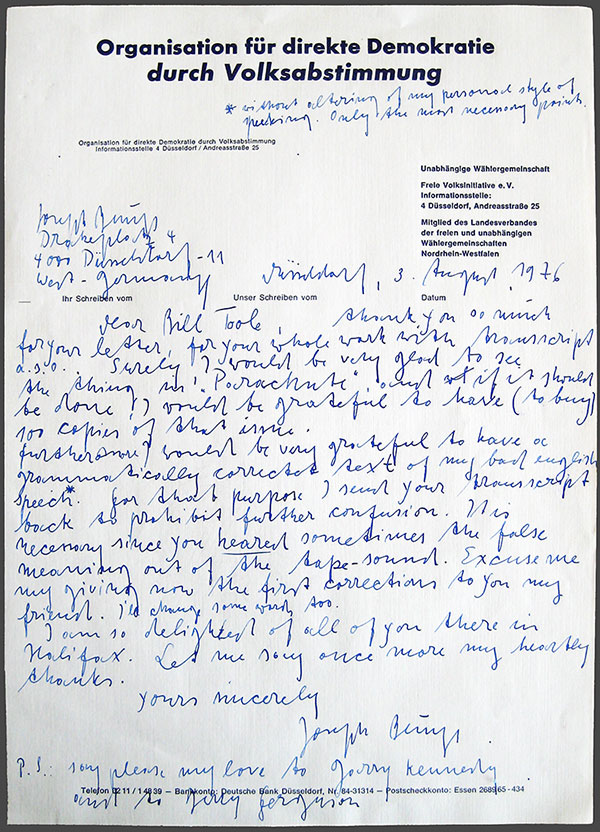
letter from Joseph Beuys – 1976