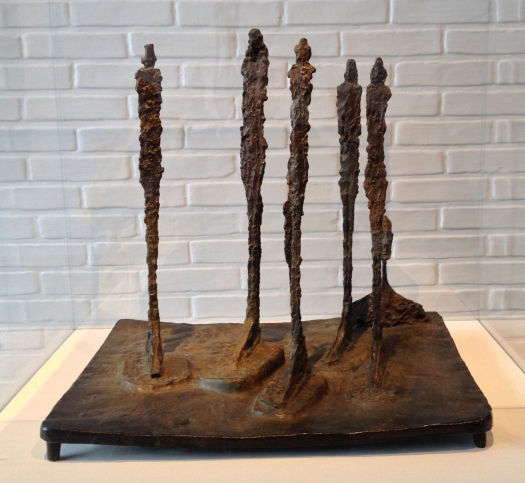
Southern Cambodia pre-Angkor period mid-7th century sandstone.
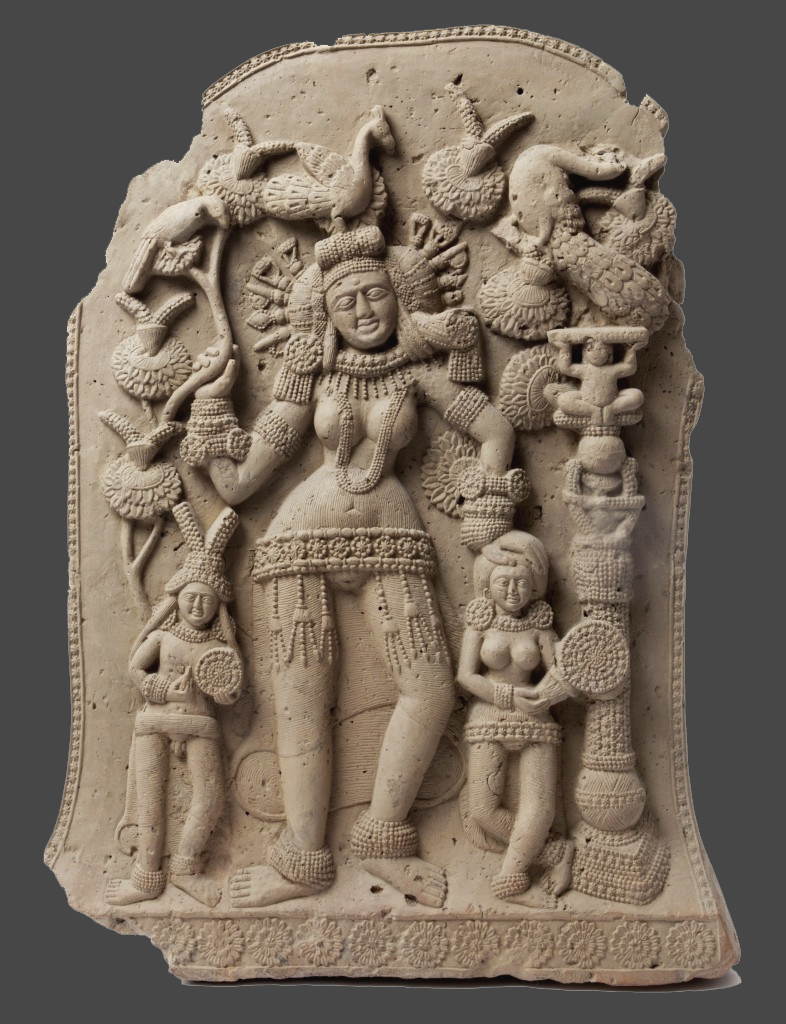
Terracotta plaque from Chandraketugarh with Yakshi figure.
Chandraketugarh is an archaeological site located beside the Bidyadhari river, about 35 km north-east of Kolkata, India, in the district of North 24 parganas, near the township of Berachampa and the Haroa Road railhead.
Years of excavation have revealed relics of several historical periods, although the chronological classification of the relics remains incomplete. Finds include Northern Black Polished Ware (NBPW) relics, later wares dated from about 400 BC to 100 BC and approximately contemporary with the Maurya period, as well as from the more recent Kushanas and Gupta periods. According to some historians, the Chandraketugarh site and surrounding area could be the place known to ancient Greek and Roman writers as ‘Gangaridai’. [ wikipedia entry ]
The most senior living lineage-holder of the Palyul Tradition, Tulku Thubten Palzang Rinpoche (“Tulku Thubzang Rinpoche”), was born in the year of the Fire Rat (1936). He was discovered by the great Khenpo Ngaga Rinpoche, the same Khenchen who confirmed the recognition of our late Holiness, Drubwang Pema Norbu Rinpoche.
Tulku Thubzang Rinpoche was a younger classmate and dear friend of His Holiness along with Dzongnang Rinpoche. The three young tulkus studied and practiced as brothers under the direct guidance of Khenchen Ngaga and received teachings and empowerments together from many realized masters. As a youth, Tulku Thubzang Rinpoche was present when His Holiness Penor Rinpoche completed Ngondrö. He has described the single-pointed zeal and physical hardships endured without complaint through which His Holiness completed all of the recitations and accumulations.
Among the empowerments Tulku Rinpoche has received are Rinchen Ter Dzöd (“Precious Terma Treasury”) from Chötrul Rinpoche and the Dam Ngang Dzö (“Treasury of Essential Instruction”), the Do Wang Drangtsi Chu Gyun (Anu Yoga Empowerment-“Continual Flow of Nectar”) from Khenpo Legshed Jordan. From Lungtog Rinpoche, he received all the Longchen Nyingthig empowerments and oral transmission teachings. From Khenpo Khyentse Lodrö, he received the Du Do Drelwa (Anu Yoga Commentary) and many other empowerments and transmissions.
Tulku Rinpoche has spent the majority of his life in Palyul, Kham, overseeing the rebuilding of Palyul Monastery. However, while making sure we have the physical buildings where all can study and practice the teachings, most important has been his activity to save and preserve the texts of teachings. Through great effort, personal danger and the blessings of all the lineage masters, Tulku Rinpoche has managed to collect texts that were nearly destroyed. The Kama teachings, for instance, were scattered in personal collections throughout the local area and the world. These he assembled in the Palyul Library, and had re-carved into wooden blocks based upon the copies. He has also preserved some of the original wooden printing blocks of the Nam Chö which remarkably had escaped destruction through being mistaken by those who would do so for firewood. The original pre-1959 library held wood blocks for 50 volumes. Thanks to Tulku Rinpoche’s hard work, and with the addition of the Kama teachings, the library today holds printing blocks of more than 110 volumes. It has likely become the world’s largest wood block library for texts related to Kama collected in one place. Because of this effort, His Holiness Penor Rinpoche was able to obtain the texts required to carry through the series of retreats known as Liberation in the Palm of Your Hand, now regularly given in Namdroling Monastery and in the US Retreat Center.
Biographies often mention that Tulku Thubzang Rinpoche is renowned for his expertise in the detailed instructions of all the ritual activities such as Mudra (hand gestures) and Cham (sacred lama dance). This understates his mastery. It is because of his capacity to know all of the most minute details of the elaborate rituals for Drupchen (twenty-four-hour a day, seven-day prayer ritual) and Accomplishment Ceremonies that these teachings have been preserved. He also knows how to play nearly all of the sacred musical instruments and has taught these. To understand the extent of his knowledge, we must know that ordinary aspirants generally can remember just one of the instruments. The monastic retreats within Palyul Monastery, Kham, are all also overseen by Tulku Rinpoche. Fortunately for us, Tulku Thubzang Rinpoche has been able to confer these teachings to hundreds of aspirants, insuring they are remembered for generations to come. In this way, granting teachings and empowerments based on these texts and based on his knowledge of all of the rituals of Palyul, Tulku Rinpoche has spent many years caring for and nurturing the entire Palyul lineage.
Free from the stain of partiality, Tulku Thubzang Rinpoche’s activities are like a great ocean of enlightened conduct for the benefit of the teachings and all sentient beings. For Palyul students, we know him for his profound humility and for a devotion to and faith in His Holiness Penor Rinpoche so deep and so vast, it makes eyes tear and hearts tremble in appreciation to observe. In the region of Palyul, he has served as His Holiness Penor Rinpoche’s surrogate. Along with His Holiness, he has been a major contributor in preventing these teachings from falling into extinction. Now, we pray, with visits to Asia and the West, he will continue to propagate these teachings to the world. [ Reference: Palyul Ling International ]
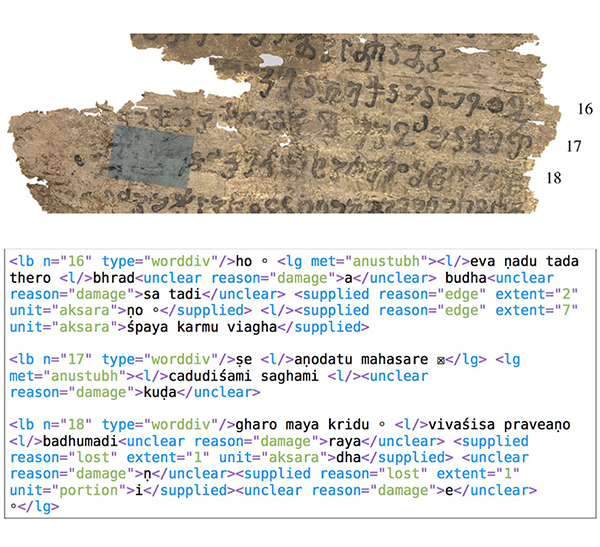
Kharoṣṭhī / Gāndhārī Buddhist text [ circa 1st century CE ] found Niya site [ current Peshawar Valley ]
XML parsing of the same [ early 21st century CE ]
Gāndhārī Language and Literature
The Early Buddhist Manuscripts Project
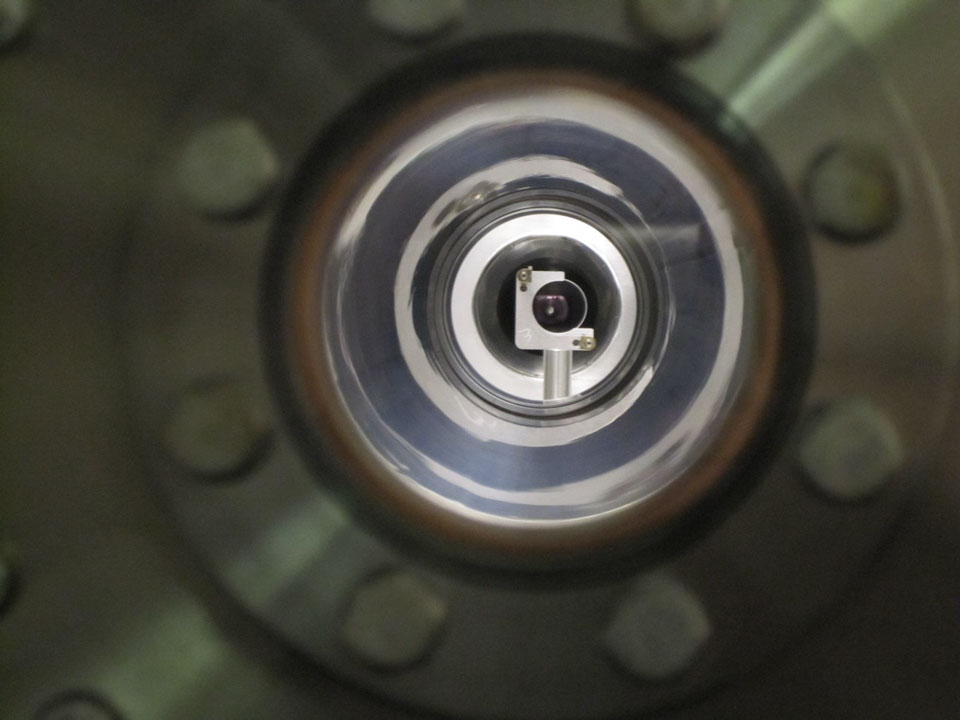
If reality has finite information content, space has finite fidelity. The quantum wave function that encodes spatial relationships maybe limited to information that can be transmitted in a “Planck broadcast”, with a bandwidth given by the inverse of the Planck time, about 2×1043 bits per second. Such a quantum system can resemble classical space-time on large scales, but locality emerges only gradually and imperfectly. Massive bodies are never perfectly at rest, but very slightly and slowly fluctuate in transverse position, with aspectrum of variation given by the Planck time. This distinctive new kind of noise associated with quantum geometry would not have been noticed up to now, but may be detectable in a new kind of experiment.
Martin Heidegger : Beiträge zur Philosophie (Vom Ereignis) | Contributions to Philosophy (Of the Event)
This second major work by Heidegger is discussed extensively in Martin Heidegger : Politics,Art, and Technology [ edited by Karsten Harries and Christoph Jamme ]. The volume had its origin in the colloquium “Art, Politics, Technology- Martin Heidegger 1889-1989″ held at Yale University in October of 1989. A few years before Karsten Harries had very generously allowed me to audit his graduate seminar on Heidegger during the time when I was at Yale. These seminars were terrific. It is to this time that I owe my continuing interest in Heidegger.
Concerning the Isomorphic : Archaic and Anarchic
What is, when the struggle for standards is dying out ? ( BzP 28 )
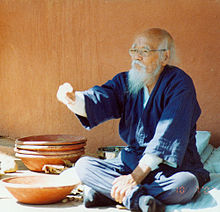
The beginning of The One-Straw Revolution [ 自然農法 わら一本の革命 ( shizen nōhō wara ippon no kakumei ) ]by Masanobu Fukuoka [ 1913-2008 ] published in Japanese in 1975 :
I believe that a revolution can begin from this one strand of straw. Seen at a glance, this rice straw may appear light and insignificant. Hardly anyone would believe that it could start a revolution. Nevertheless, I have come to realize the weight and power of this straw. For me, this revolution is very real.
Look at these fields of rye and barley. This ripening grain will yield about 22 bushels (1,300 pounds) per quarter acre. I believe this matches the top yields in Ehime Prefecture. If this equals the best yield in Ehime Prefecture, it could easily equal the top harvest in the whole country since this is one of the prime agricultural areas in Japan…and yet these fields have not been ploughed for twenty-five years.
To plant, I simply broadcast rye and barley seed on separate fields in the fall, while the rice is still standing. A few weeks later, I harvest the rice and spread the rice straw back over the fields. It is the same for the rice seeding. This winter grain will be cut around the 20th of May. About two weeks before the crop has fully matured, I broadcast rice seed over the rye and barley. After the winter, grain has been harvested and the grains threshed, I spread the rye and barley straw over the field.
I suppose that using the same method to plant rice and winter grain is unique to this kind of farming. However, there is an easier way. As we walk over to the next field, let me point out that the rice there was sown last fall at the same time as the w inter grain. The whole year’s planting was finished in that field by New Year’s Day.
You might also notice that white clover and weeds are growing in these fields. Clover seed was sown among the rice plants in early October, shortly before the rye and barley. I do not worry about sowing the weeds-they reseed themselves quite easily.
So the order of planting in this field is like this: in early October, clover is broadcast among the rice; winter grain then follows in the middle of the month.
You might also notice that white clover and weeds are growing in these fields. Clover seed was sown among the rice plants in early October, shortly before the rye and barley. I do not worry about sowing the weeds-they reseed themselves quite easily.In early November, the rice is harvested, and then the next year’s rice seed is sown and straw laid across the field. The rye and barley you see in front of you were grown this way. In caring for a quarter-acre field, one or two people can do all the work of growing rice and winter grain in a matter of a few days. It seems unlikely that there could be a simpler way of raising grain.
This method completely contradicts modern agricultural techniques. It throws scientific knowledge and traditional farming craft right out the window. With this kind of farming, which uses no machines, no prepared fertilizer, and no chemicals; it is possible to attain a harvest equal to or greater than that of the average Japanese farm. The proof is ripening right before your eyes.
Anarchism, Or The Revolutionary Movement Of The Twenty-First Century – David Graeber and Andrej Grubacic
It is becoming increasingly clear that the age of revolutions is not over. It’s becoming equally clear that the global revolutionary movement in the twenty first century, will be one that traces its origins less to the tradition of Marxism, or even of socialism narrowly defined, but of anarchism.
Everywhere from Eastern Europe to Argentina, from Seattle to Bombay, anarchist ideas and principles are generating new radical dreams and visions. Often their exponents do not call themselves “anarchists”. There are a host of other names: autonomism, anti-authoritarianism, horizontality, Zapatismo, direct democracy… Still, everywhere one finds the same core principles: decentralization, voluntary association, mutual aid, the network model, and above all, the rejection of any idea that the end justifies the means, let alone that the business of a revolutionary is to seize state power and then begin imposing one’s vision at the point of a gun. Above all, anarchism, as an ethics of practice-the idea of building a new society “within the shell of the old”-has become the basic inspiration of the “movement of movements” (of which the authors are a part), which has from the start been less about seizing state power than about exposing, de-legitimizing and dismantling mechanisms of rule while winning ever-larger spaces of autonomy and participatory management within it.